






Bromelain: The Pineapple Enzyme That Reduces Swelling and Boosts Nutrient Absorption
Bromelain: The Pineapple Enzyme That Reduces Swelling and Boosts Nutrient Absorption
Bromelain is a complex of proteolytic (protein-digesting) enzymes derived from pineapple stem (Ananas comosus) that contributes to joint health through two distinct mechanisms: direct anti-inflammatory and anti-edema (anti-swelling) activity via fibrin degradation and prostaglandin modulation, and a separate, formulation-significant role as an absorption enhancer for co-administered compounds. Research has demonstrated that bromelain significantly increases the intestinal absorption of quercetin and other co-formulated nutrients through its proteolytic effects on the intestinal barrier, making it — like quercetin's curcumin-amplifying role — a compound whose value extends beyond its own independent activity into measurably improving the effectiveness of the rest of the formula it appears alongside.
Bromelain occupies a similar dual-purpose position to quercetin within a comprehensive joint formula: it has genuine independent anti-inflammatory activity, but its broader formulation value lies significantly in how it interacts with and enhances the other compounds present alongside it — a detail that is easy to overlook when evaluating bromelain simply as "a digestive enzyme."

Bromelain's Direct Anti-Inflammatory Mechanisms
Bromelain's anti-inflammatory activity operates through pathways distinct from the COX inhibition (turmeric), 5-LOX inhibition (Boswellia), and mast cell stabilization (quercetin) discussed in connection with the other anti-inflammatory compounds in a comprehensive joint formula, giving it a genuinely separate mode of action within the broader inflammatory picture.
Fibrin Degradation: In acutely inflamed tissue, fibrin — a protein involved in blood clotting — can accumulate as deposits within and around the inflamed area. These fibrin deposits impair local fluid circulation, contributing to the swelling and localized hypoxia (reduced oxygen availability) that sustains inflammatory conditions. Bromelain's proteolytic (protein-cleaving) activity actively breaks down these fibrin deposits, supporting improved local circulation and contributing to the resolution of swelling in acutely inflamed joint tissue.
Prostaglandin Modulation: Bromelain has been shown to influence prostaglandin synthesis through a pathway distinct from direct COX enzyme inhibition — research suggests bromelain may affect the precursor availability or downstream processing involved in prostaglandin production, contributing an anti-inflammatory effect that is complementary to, rather than redundant with, turmeric's more direct COX-2 inhibitory mechanism.
Bradykinin Pathway Effects: Some research has also examined bromelain's effects on bradykinin — a peptide involved in pain signaling and vascular permeability — suggesting an additional, less extensively characterized pathway contributing to bromelain's documented anti-swelling and analgesic effects in various inflammatory contexts.
The Absorption-Enhancing Role: How Bromelain Amplifies the Rest of the Formula
This is bromelain's most distinctive formulation contribution, and it parallels the pharmacokinetic synergy discussed in connection with quercetin and curcumin, though through a different mechanism.
Bromelain's proteolytic enzymatic activity affects the intestinal epithelium in ways that have been shown to enhance the absorption of various co-administered compounds. Research has specifically demonstrated that bromelain significantly enhances the intestinal absorption of quercetin — meaning bromelain's presence in a formula containing both compounds creates a mutually reinforcing relationship: bromelain improves quercetin's absorption, while quercetin (as discussed in its own dedicated context) amplifies curcumin's effective bioavailability. This creates a layered pharmacokinetic enhancement chain across three separate formula compounds.
Bromelain has also been studied for its absorption-enhancing effects on glucosamine specifically — directly relevant to a joint formula's primary structural compound. By supporting more efficient glucosamine absorption, bromelain's presence may contribute to a meaningfully greater proportion of an ingested glucosamine dose actually reaching systemic circulation and, ultimately, joint tissue, compared to glucosamine administered without this absorption-supporting co-compound.
The Clinical and Research Evidence
Anti-Inflammatory and Anti-Edema Research: A review published in Evidence-Based Complementary and Alternative Medicine (Brien et al., 2004) examined the available evidence for bromelain's anti-inflammatory and anti-edema effects, concluding that bromelain has documented efficacy for reducing inflammation and swelling across multiple clinical contexts, including post-surgical and post-traumatic swelling, with mechanistic plausibility extending to joint inflammation given the shared fibrin-degradation and prostaglandin-modulating pathways involved.
Osteoarthritis-Specific Research: While bromelain's largest evidence base centers on post-surgical and general inflammatory swelling rather than dedicated, large-scale osteoarthritis trials of the scale conducted for glucosamine or chondroitin, several smaller studies and reviews have specifically examined bromelain for osteoarthritis symptom management, generally finding favorable but more preliminary results compared to the more extensively validated structural compounds in a comprehensive formula.
Absorption Enhancement Studies: The specific research demonstrating bromelain's enhancement of quercetin and glucosamine absorption provides the mechanistic basis for its inclusion as a formulation-amplifying compound, a role that is distinct from — and arguably as important as — its standalone anti-inflammatory contribution.
Why Bromelain's Dual Role Matters for Formula Design
Within a comprehensive joint formula, bromelain functions as something like a connective compound — its fibrin-degrading and prostaglandin-modulating activity contributes a genuinely distinct anti-inflammatory mechanism alongside turmeric's COX inhibition, Boswellia's 5-LOX inhibition, and quercetin's mast cell stabilization. But its absorption-enhancing effects on quercetin and glucosamine mean its practical value extends into improving the delivery and effectiveness of compounds that are themselves doing significant independent work within the formula — a multiplier effect that is easy to underestimate when evaluating bromelain's contribution in isolation.
Dosing and Standardization
Bromelain's potency is typically measured in GDU (gelatin-digesting units) or MCU (milk-clotting units) rather than simple milligram weight, since its biological activity depends on actual enzymatic potency rather than raw mass. This is an important detail for evaluating bromelain-containing products: a higher milligram amount of low-potency bromelain may deliver less actual enzymatic activity than a lower milligram amount of a higher-potency, properly standardized extract. Clinical research on bromelain's anti-inflammatory effects has generally used doses in the range of 500 mg to 2,000 mg daily of standardized extract, depending on the specific potency grading used.
Safety Considerations
Bromelain has a generally favorable safety profile, with mild gastrointestinal upset being the most commonly reported side effect in a small minority of users. Because bromelain has documented mild antiplatelet (blood-thinning) properties, individuals taking anticoagulant or antiplatelet medications, including warfarin or aspirin therapy, should discuss bromelain supplementation with their healthcare provider, given the potential for additive effects. Individuals with a known pineapple allergy should avoid bromelain supplementation given its direct pineapple-stem origin.
Clear Wellness 360 Products with Bromelain
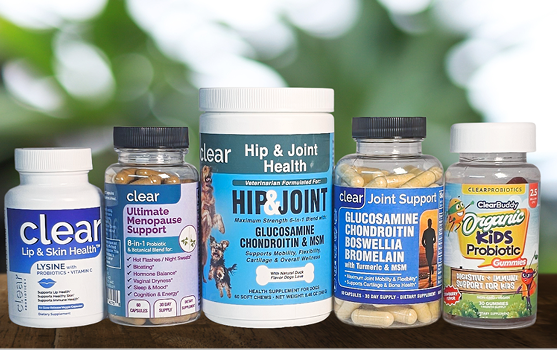
Clear Joint Support includes bromelain alongside Glucosamine Sulfate Potassium, Chondroitin Sulfate, MSM, Turmeric, Boswellia, Quercetin, and L-Methionine — contributing direct fibrin-degrading and prostaglandin-modulating anti-inflammatory activity while specifically enhancing the intestinal absorption of the formula's quercetin and glucosamine components.
Glossary of Key Terms
Proteolytic Enzymes — Enzymes capable of breaking down (digesting) proteins into smaller peptide fragments or individual amino acids. Bromelain is a complex of proteolytic enzymes derived from pineapple stem, responsible for both its fibrin-degrading anti-inflammatory activity and its effects on intestinal absorption of co-administered compounds.
Fibrin — A protein involved in blood clotting that can accumulate as deposits within and around acutely inflamed tissue, impairing local fluid circulation and contributing to swelling. Bromelain's proteolytic activity actively degrades these fibrin deposits.
Bradykinin — A peptide involved in pain signaling and vascular permeability regulation. Some research has examined bromelain's effects on bradykinin pathways as a contributing mechanism to its documented anti-swelling and analgesic effects.
GDU (Gelatin-Digesting Units) / MCU (Milk-Clotting Units) — Standardized measures of enzymatic potency used to characterize bromelain products, reflecting actual biological activity rather than simple milligram weight. Higher-potency, properly standardized bromelain delivers more reliable enzymatic activity than an equivalent milligram amount of lower-potency material.
Absorption Enhancement — The improvement of a compound's intestinal uptake into systemic circulation, typically achieved through mechanisms that alter intestinal permeability, inhibit competing metabolic pathways, or otherwise increase the proportion of an ingested dose that reaches the bloodstream in active form. Bromelain has documented absorption-enhancing effects on co-administered quercetin and glucosamine.
Frequently Asked Questions
Q: What does bromelain do for joint health specifically?
Bromelain contributes direct anti-inflammatory and anti-swelling activity through fibrin degradation (breaking down protein deposits that impair circulation in inflamed tissue) and prostaglandin pathway modulation. It also has a separate, formulation-significant role as an absorption enhancer, having been shown to improve the intestinal absorption of co-administered quercetin and glucosamine — meaning bromelain's presence in a comprehensive formula amplifies the effectiveness of other ingredients beyond its own independent activity.
Q: Is bromelain just a digestive enzyme, or does it have other benefits?
While bromelain is well known for its digestive enzyme activity, its proteolytic mechanism extends to genuine anti-inflammatory and anti-edema effects documented across multiple clinical contexts, including post-surgical and post-traumatic swelling. Within a joint formula specifically, bromelain's fibrin-degrading activity and its absorption-enhancing effects on other formula ingredients represent benefits distinct from its digestive function.
Q: Why does bromelain potency matter more than the milligram dose on the label?
Because bromelain's biological activity depends on actual enzymatic potency, which is measured in standardized units (GDU or MCU) rather than simple weight. A higher milligram amount of low-potency bromelain may deliver less real enzymatic activity than a smaller milligram amount of a properly standardized, higher-potency extract — making potency standardization a more meaningful quality indicator than raw milligram content alone.
Q: Can bromelain interact with blood thinners?
Yes, this is the primary safety consideration. Bromelain has documented mild antiplatelet (blood-thinning) properties, which can have additive effects with anticoagulant or antiplatelet medications, including warfarin and aspirin therapy. Anyone on these medications should discuss bromelain supplementation with their healthcare provider.
Q: How does bromelain enhance the absorption of other ingredients?
Bromelain's proteolytic enzymatic activity affects the intestinal epithelium in ways that have been specifically shown in research to enhance the absorption of co-administered quercetin and glucosamine. The exact mechanism involves bromelain's effects on intestinal barrier permeability, allowing a greater proportion of these co-administered compounds to be absorbed into systemic circulation than would occur without bromelain present.
These statements have not been evaluated by the Food and Drug Administration. This product is not intended to diagnose, treat, cure, or prevent any disease.
References: Brien S et al. (2004). Bromelain as a treatment for osteoarthritis: a review of clinical studies. Evidence-Based Complementary and Alternative Medicine, 1(3), 251–257. | Pavan R et al. (2012). Properties and therapeutic application of bromelain. Biotechnology Research International. | Maurer HR (2001). Bromelain: biochemistry, pharmacology and medical use. Cellular and Molecular Life Sciences, 58(9), 1234–1245. | Hale LP et al. (2005). Bromelain treatment alters leukocyte adhesion molecule expression. Clinical Immunology, 116(2), 135–142.