




Dong Quai: The "Female Ginseng" Behind Centuries of Traditional Hormonal Support
Dong Quai (Angelica sinensis) is a root used in Traditional Chinese Medicine for over a thousand years, earning the nickname "female ginseng" for its long-standing role in supporting women's hormonal health across menstrual, perimenopausal, and menopausal transitions. Modern research has identified ferulic acid, ligustilide, and a class of plant coumarins as the primary bioactive compounds responsible for its documented effects on smooth muscle relaxation, mild vasodilation, and central nervous system calming activity - mechanisms relevant to menstrual cramping, circulatory support, and the agitation and sleep disruption that frequently accompany hormonal transitions. Dong Quai is most commonly used in combination with other botanicals such as black cohosh and chasteberry, where its smooth-muscle relaxant and circulatory properties provide a complementary mechanism to the serotonergic and prolactin-modulating effects of its companion herbs.
Few botanicals in women's health have a longer continuous history of use than Dong Quai. In Traditional Chinese Medicine, it has been formulated into compound prescriptions for menstrual irregularity, postpartum recovery, and the broader category of conditions classified as "blood deficiency" - a TCM framework concept loosely overlapping with circulatory and hormonal support in modern biomedical terms. Its inclusion in nearly every major Western menopause supplement combination is a direct inheritance of this traditional use, now substantiated by an increasing body of pharmacological research.

The Active Compounds: Ferulic Acid, Ligustilide, and Coumarins
Dong Quai root contains a complex phytochemical profile, but three compound classes account for most of its documented biological activity.
Ligustilide is a volatile phthalide compound and one of the most extensively studied constituents of Dong Quai. It has demonstrated smooth muscle relaxant properties in pharmacological studies - relevant to its traditional use for menstrual cramping, which is driven by excessive uterine smooth muscle contraction. Ligustilide has also shown central nervous system activity in animal models, including anxiolytic-like effects, which may contribute to Dong Quai's traditional reputation for calming agitation associated with hormonal fluctuation.
Ferulic Acid is a phenolic compound with well-documented antioxidant activity, functioning through both direct free-radical scavenging and activation of the Nrf2 pathway - the cellular system that upregulates the body's endogenous antioxidant enzyme production. Ferulic acid also has mild anti-inflammatory and platelet-aggregation-inhibiting properties, contributing to Dong Quai's traditional association with healthy circulation.
Coumarins - a class of compounds found throughout the Apiaceae plant family (which includes Dong Quai, along with celery and parsley) - contribute to Dong Quai's documented mild vasodilatory and antiplatelet effects. This is the basis for Dong Quai's traditional reputation for supporting peripheral circulation, and it is also the reason for the most important safety consideration associated with the herb: coumarins can have additive effects with blood-thinning medications.
Why "Female Ginseng" Is a Useful - and Slightly Misleading - Name
The "female ginseng" name reflects Dong Quai's prominent and long-standing role in women's health formulations across East Asian herbal traditions, but it is mechanistically distinct from true Panax ginseng. Where ginseng's ginsenosides work primarily through adaptogenic HPA-axis modulation and eNOS-mediated vasodilation, Dong Quai's ligustilide and coumarin content work more specifically on smooth muscle tone and peripheral circulation - overlapping conceptually (both relate to balanced energy and circulation in traditional frameworks) but operating through largely separate biochemical pathways.
This distinction matters for understanding why Dong Quai is so frequently paired with - rather than substituted for - other adaptogenic and hormonally active botanicals in modern formulations. It is not redundant with ginseng, ashwagandha, or black cohosh; it contributes a circulatory and smooth-muscle dimension that those herbs do not directly address.
The Estrogenic Question: What the Research Actually Shows
Like black cohosh, Dong Quai has historically been described as having phytoestrogenic activity, though the modern research picture is more nuanced.
In vitro and animal studies have produced mixed results regarding estrogen receptor binding - some studies have found weak estrogenic activity in specific Dong Quai extracts, while others have found no significant estrogen receptor binding at physiologically relevant concentrations. This inconsistency likely reflects differences in extraction method, plant part used, and the specific compound fractions tested across different studies.
The clinical relevance of this uncertainty is that Dong Quai's most consistently demonstrated effects - smooth muscle relaxation, mild vasodilation, antioxidant activity, and central nervous system calming - do not require estrogenic activity to explain. This is consistent with the broader pattern seen across several traditional women's health botanicals, where decades-old assumptions about estrogen-mimicking mechanisms are being revised in favor of more specific, better-characterized pharmacological explanations.
Traditional and Modern Use Patterns
In Traditional Chinese Medicine, Dong Quai is rarely used as a standalone herb - it is most commonly incorporated into multi-herb formulations such as Dang Gui Shao Yao San (a classical formula for menstrual and gynecological complaints) where its smooth-muscle relaxant and circulatory properties complement the actions of companion herbs.
This pattern has carried directly into modern Western herbal supplement formulation. Dong Quai is rarely sold or studied as an isolated single-ingredient product for menopause; it is consistently formulated alongside black cohosh, chasteberry, red clover, or ashwagandha - a combination approach that mirrors centuries of traditional formulation logic, now reinforced by the modern pharmacological understanding that these herbs work through complementary, non-redundant mechanisms.
What Dong Quai Contributes to a Menopause Formula Specifically
In the context of a comprehensive menopause support formula, Dong Quai's specific contributions are:
Smooth muscle relaxation: Relevant to the menstrual cramping that can persist or intensify during perimenopause as cycles become irregular, and to general pelvic and abdominal comfort.
Mild peripheral vasodilation: Complementary to - though mechanistically distinct from - the thermoregulatory hot flash mechanism addressed by black cohosh. Some women report improved circulation-related comfort (cold extremities are a commonly reported perimenopausal complaint alongside hot flashes, paradoxically reflecting the same underlying thermoregulatory dysregulation).
Antioxidant support: Ferulic acid's free-radical scavenging activity contributes general cellular protective effects during a life stage associated with increased oxidative stress markers.
Central nervous system calming: Ligustilide's documented anxiolytic-like activity in animal models is consistent with Dong Quai's traditional reputation for easing the irritability and emotional volatility frequently reported during hormonal transitions.
Safety Considerations
The most clinically important safety consideration for Dong Quai relates to its coumarin content. Coumarins have mild antiplatelet and anticoagulant properties, meaning Dong Quai can theoretically have additive effects with blood-thinning medications including warfarin, aspirin therapy, and other anticoagulants or antiplatelet drugs. Anyone taking these medications should consult their healthcare provider before adding Dong Quai to their regimen.
Dong Quai also contains furanocoumarins, a compound class that can increase photosensitivity (sensitivity to sunlight) in some individuals - a consideration worth noting for those who spend significant time outdoors. As with most botanicals discussed in this category, Dong Quai is not recommended during pregnancy, given both its smooth-muscle relaxant properties and the historical traditional use of related Angelica species to support menstrual flow.
Clear Wellness 360 Products with Dong Quai
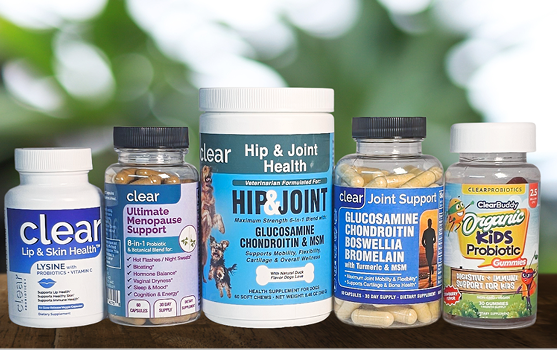
Clear Menopause Support includes Dong Quai as part of its 8-in-1 botanical and probiotic blend, working alongside black cohosh, chasteberry, red clover, ashwagandha, maca, and DIM to address the full spectrum of hormonal transition symptoms - temperature dysregulation, mood, sleep, and gut-hormone balance.
→ View Clear Menopause Support
Glossary of Key Terms
Ligustilide - A volatile phthalide compound found in Dong Quai root, with documented smooth muscle relaxant and central nervous system anxiolytic-like activity in pharmacological studies. Ligustilide is considered one of the primary bioactive compounds responsible for Dong Quai's traditional use in easing menstrual cramping and emotional agitation.
Ferulic Acid - A phenolic antioxidant compound present in Dong Quai that scavenges free radicals directly and activates the Nrf2 antioxidant pathway. Ferulic acid also has mild anti-inflammatory and antiplatelet properties, contributing to Dong Quai's traditional association with circulatory support.
Coumarins - A class of plant compounds found in Dong Quai and related Apiaceae family plants, responsible for mild vasodilatory and antiplatelet (blood-thinning) effects. Coumarins are the basis for the primary safety consideration with Dong Quai - potential additive effects with anticoagulant or antiplatelet medications.
Furanocoumarins - A subclass of coumarin compounds found in Dong Quai that can increase skin photosensitivity (sensitivity to UV light) in some individuals. This is a distinct consideration from the antiplatelet effects of broader coumarin compounds.
Phytoestrogen - A plant compound capable of binding to and activating estrogen receptors. Research on Dong Quai's estrogenic activity has produced mixed results, with current evidence suggesting its clinically relevant effects are more likely explained by smooth muscle relaxation, vasodilation, and antioxidant mechanisms than by estrogen receptor activation.
Apiaceae - The plant family that includes Dong Quai (Angelica sinensis) along with celery, parsley, fennel, and carrots. Many Apiaceae family plants share coumarin content, which is relevant to understanding cross-reactivity in photosensitivity and antiplatelet considerations.
Frequently Asked Questions
Q: What is Dong Quai used for?
Dong Quai has been used in Traditional Chinese Medicine for over a thousand years for women's hormonal health, particularly menstrual irregularity and the broader category of "blood deficiency" symptoms in TCM terminology. In modern formulations, it is primarily included for its smooth muscle relaxant properties (relevant to menstrual cramping), mild vasodilatory and circulatory support, and central nervous system calming activity - most often as a complementary ingredient alongside black cohosh, chasteberry, or red clover rather than as a standalone treatment.
Q: Is Dong Quai a phytoestrogen?
Research findings are mixed. Some in vitro and animal studies have found weak estrogenic activity in specific extracts, while others have found no significant estrogen receptor binding. Dong Quai's most consistently demonstrated and clinically relevant effects - smooth muscle relaxation, vasodilation, and antioxidant activity - do not depend on estrogenic mechanisms to explain its traditional and modern use.
Q: Can I take Dong Quai if I'm on blood thinners?
This requires a conversation with your healthcare provider before use. Dong Quai contains coumarin compounds with mild antiplatelet and anticoagulant properties that can have additive effects with warfarin, aspirin therapy, or other blood-thinning medications. This is the most clinically significant safety consideration associated with the herb.
Q: Why is Dong Quai almost always combined with other herbs rather than sold alone?
This reflects both traditional Chinese Medicine formulation practice - where Dong Quai is rarely prescribed as a standalone herb - and the modern pharmacological understanding that its smooth-muscle relaxant and circulatory mechanisms are complementary to, rather than redundant with, the serotonergic mechanisms of black cohosh, the prolactin-modulating effects of chasteberry, and the adaptogenic HPA-axis effects of ashwagandha. Combination formulation allows each herb's distinct mechanism to address a different dimension of the menopausal symptom picture.
Q: Does Dong Quai help with hot flashes specifically?
Dong Quai's primary documented mechanisms - smooth muscle relaxation and mild vasodilation - are distinct from the serotonergic hypothalamic mechanism that most directly addresses hot flash frequency (the mechanism associated with black cohosh). Dong Quai is more specifically associated with circulatory comfort and menstrual cramping relief, which is why it functions best as a complementary ingredient within a comprehensive formula rather than as a primary hot-flash intervention on its own.
These statements have not been evaluated by the Food and Drug Administration. This product is not intended to diagnose, treat, cure, or prevent any disease.
References: Yim TK et al. (2000). Myocardial protective effect of an herbal extract of Astragalus membranaceus and Angelica sinensis. Phytotherapy Research. | Circosta C et al. (2006). Estrogenic activity of standardized extract of Angelica sinensis. Phytotherapy Research, 20(8), 665-669. | Hook IL (2014). Danggui to Angelica sinensis root: a phytochemical and pharmacological review. Journal of Ethnopharmacology, 152(1), 1-13. | Wilasrusmee C et al. (2002). Immunostimulatory effect of Dong Quai. Journal of the Medical Association of Thailand.