





Glucosamine Sulfate: The Cartilage-Building Block Behind 20+ Years of Joint Research
Glucosamine sulfate is an amino monosaccharide that serves as the primary biochemical precursor for the synthesis of glycosaminoglycans — the long-chain polysaccharides that form the structural backbone of aggrecan and other proteoglycans within articular cartilage. As the substrate from which the body builds the water-retaining proteoglycan network responsible for cartilage's compressive resilience, glucosamine sulfate has accumulated more than two decades of human clinical trial evidence, including long-term European studies demonstrating not just symptomatic pain relief but measurable preservation of joint space — a structural radiographic marker of cartilage health — making it one of the few nutritional compounds with evidence suggesting it may genuinely slow the structural progression of joint deterioration rather than merely masking its symptoms.
Glucosamine occupies a unique position among joint health ingredients: it is simultaneously one of the most widely used and one of the most rigorously studied nutritional compounds in existence, with a research history that predates the modern nutraceutical industry by decades. Understanding its specific biological role — and why the sulfate form matters — explains both why the evidence is so substantial and why not all glucosamine products perform equally.

What Glucosamine Actually Does Inside a Joint
To understand glucosamine's function, it helps to picture articular cartilage as a dense, water-retaining structural sponge. The sponge's resilience — its capacity to absorb compressive forces during movement and weight-bearing — depends almost entirely on a giant molecule called aggrecan, the dominant proteoglycan within cartilage. Aggrecan's structure consists of a protein core studded with long chains of glycosaminoglycans (GAGs), and the negative electrical charge of those GAG chains is what attracts and traps water molecules within the cartilage matrix under compressive load.
Glucosamine is the essential biochemical building block from which the cells of cartilage — chondrocytes — synthesize these glycosaminoglycan chains. Without sufficient glucosamine availability, chondrocytes cannot maintain adequate aggrecan production, and the cartilage matrix progressively loses its water-retention capacity, becoming thinner, stiffer, and less able to distribute mechanical load — a process that accelerates surface wear and is a defining feature of osteoarthritis progression.
Supplementing glucosamine provides additional raw material for this synthesis pathway, supporting chondrocytes' ongoing capacity to maintain and repair the cartilage matrix, particularly important given that natural glucosamine production tends to decline with age as chondrocyte metabolic activity slows.
Why the Sulfate Form Specifically Matters
Glucosamine is available in several chemical forms, most commonly glucosamine sulfate and glucosamine hydrochloride (HCl). This distinction is not a minor labeling detail — it has measurable consequences for clinical effectiveness.
The sulfate group attached to glucosamine sulfate is not merely a delivery vehicle — sulfate itself is a required structural component of glycosaminoglycan synthesis. Glycosaminoglycan chains, including chondroitin sulfate and keratan sulfate, require sulfation (the attachment of sulfate groups) to achieve their negative charge density and water-binding capacity. Glucosamine sulfate provides this sulfate group as part of the same dose that delivers glucosamine itself, offering a dual contribution that glucosamine hydrochloride — which lacks the sulfate component — cannot replicate.
This difference is reflected in the comparative research literature: multiple analyses examining trial outcomes by glucosamine form have found that studies using glucosamine sulfate show more consistent positive results than those using glucosamine hydrochloride, a pattern researchers have specifically attributed to this independent sulfate contribution.
The Clinical Evidence
The Pavelka et al. Trial (2002, Archives of Internal Medicine): This three-year, randomized, double-blind, placebo-controlled trial examined 202 patients with knee osteoarthritis receiving 1,500 mg of glucosamine sulfate daily. The glucosamine group showed a statistically significant reduction in joint space narrowing — a structural, radiographic measure of cartilage preservation — compared to placebo, alongside significant improvements in pain and function scores. This was among the first studies to suggest glucosamine sulfate's effects extend beyond symptom management into structural disease modification.
The Reginster et al. Trial (2001, The Lancet): A separate three-year randomized controlled trial of 212 knee osteoarthritis patients found that the placebo group's average joint space decreased by 0.31 mm over the study period, while the glucosamine sulfate group's joint space actually increased by 0.04 mm — a statistically significant structural difference suggesting genuine cartilage preservation rather than simple symptomatic relief.
The GAIT Trial (2006, New England Journal of Medicine): The NIH-funded Glucosamine/Chondroitin Arthritis Intervention Trial, the largest randomized controlled trial of these compounds conducted in the United States, examined 1,583 participants. While overall results were modest, the subgroup of patients with moderate-to-severe knee pain showed a 79.2% response rate with the glucosamine-plus-chondroitin combination, compared to 54.3% for placebo — a margin comparable to the celecoxib (prescription COX-2 inhibitor) comparison arm of the same trial. It is worth noting this trial used glucosamine hydrochloride rather than sulfate, which several researchers have suggested may partially explain why its overall (non-subgroup) findings were less pronounced than the European sulfate-based trials.
Why Glucosamine Works Better in Combination
The clinical evidence consistently points toward glucosamine being most effective when combined with chondroitin sulfate — a complementary compound that provides both additional glycosaminoglycan structural material and active inhibition of the cartilage-degrading enzymes that work against glucosamine's building efforts. This combination logic, along with the addition of anti-inflammatory compounds like Boswellia and turmeric, reflects the broader understanding that joint deterioration involves both insufficient cartilage matrix synthesis and active inflammatory degradation occurring simultaneously — addressing only the synthesis side leaves the degradation side of the equation unaddressed.
Dosing and Timeline
The research-supported dose for glucosamine sulfate is 1,500 mg daily — the dose used consistently across the long-term European trials demonstrating structural benefit. Lower doses are not well-supported by the existing evidence base. Because glucosamine's mechanism involves supporting an ongoing biological synthesis process rather than producing an acute pharmacological effect, meaningful symptomatic improvement typically requires 6 to 8 weeks of consistent daily use, with the structural, joint-space-preserving benefits demonstrated in research requiring sustained use over 1 to 3 years to become measurable.
Safety Considerations
Glucosamine sulfate has an excellent long-term safety record across multiple multi-year clinical trials, with no significant adverse effects identified even over 3-year continuous use periods. It does not carry the gastrointestinal, cardiovascular, or renal risks associated with long-term NSAID use. Individuals with shellfish allergies should specifically confirm that their glucosamine sulfate is sourced through a shellfish-free fermentation process, since traditional glucosamine extraction uses shrimp, crab, and lobster shells. Early concerns regarding glucosamine's effect on blood glucose in diabetics have not been substantiated as clinically significant in subsequent research, though individuals with diabetes may wish to monitor blood sugar when beginning supplementation as a precaution.
Clear Wellness 360 Products with Glucosamine Sulfate
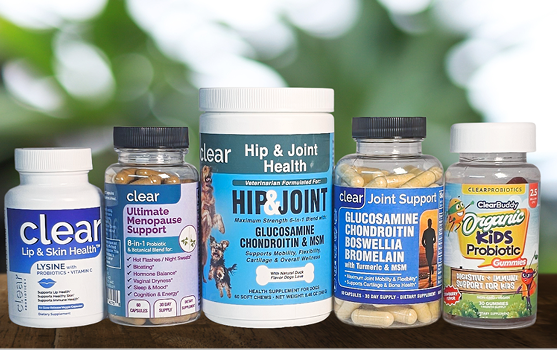
Clear Joint Support delivers Glucosamine Sulfate Potassium at the research-validated 1,500 mg daily dose, paired with Chondroitin Sulfate, MSM, Turmeric, Boswellia, Quercetin, Bromelain, and L-Methionine across a comprehensive 8-mechanism formula addressing both cartilage structure and inflammatory pathways.
Glossary of Key Terms
Aggrecan — The dominant proteoglycan within articular cartilage, responsible for the tissue's compressive stiffness and water-retention capacity. Aggrecan synthesis requires glucosamine as a primary biochemical precursor.
Glycosaminoglycans (GAGs) — Long, negatively charged polysaccharide chains that form the functional structural components of proteoglycans like aggrecan. Their charge density, which depends partly on sulfation, determines their capacity to attract and retain water within the cartilage matrix.
Chondrocytes — The specialized cells responsible for producing and maintaining cartilage matrix components, including aggrecan and type II collagen. Chondrocyte synthetic activity declines with age, contributing to the gradual shift toward net cartilage loss that defines osteoarthritis progression.
Glucosamine Sulfate Potassium — A stable salt form of glucosamine sulfate that delivers both the glucosamine molecule and its associated sulfate group, the latter contributing independently to glycosaminoglycan sulfation. This is the form used in the long-term European clinical trials demonstrating structural joint benefit.
Joint Space Narrowing — A radiographic measure of cartilage loss visible on X-ray as the space between adjacent bones in a joint decreases. Joint space narrowing is considered a structural, objective endpoint in osteoarthritis research, distinct from self-reported pain scores.
Glucosamine Hydrochloride (HCl) — An alternate chemical form of glucosamine that lacks the sulfate component present in glucosamine sulfate. Several comparative analyses have found less consistent clinical trial results with this form, a difference attributed to the missing independent sulfate contribution to glycosaminoglycan synthesis.
Frequently Asked Questions
Q: Does glucosamine sulfate actually slow joint deterioration, or just relieve pain?
The research evidence suggests both. Long-term European trials using 1,500 mg of glucosamine sulfate daily over three years found statistically significant reductions in joint space narrowing — a structural, radiographic measure of cartilage preservation — alongside symptomatic pain and function improvements. This dual evidence base is part of why glucosamine sulfate is classified by some European guidelines as a "symptomatic slow-acting drug for osteoarthritis" (SYSADOA), a category distinguishing it from simple analgesics.
Q: What is the difference between glucosamine sulfate and glucosamine hydrochloride?
Glucosamine sulfate includes a sulfate group that contributes independently to glycosaminoglycan synthesis — the same sulfation process required to give cartilage's structural polysaccharides their water-retaining negative charge. Glucosamine hydrochloride lacks this sulfate contribution. Multiple comparative analyses of the clinical trial literature have found more consistent positive results for glucosamine sulfate than for the hydrochloride form.
Q: How long does glucosamine sulfate take to work?
Symptomatic improvement typically requires 6 to 8 weeks of consistent daily use, since glucosamine supports an ongoing biological synthesis process rather than producing an immediate pharmacological effect. The structural joint-space-preserving benefits demonstrated in clinical research require sustained use over 1 to 3 years to become measurable through radiographic assessment.
Q: Is glucosamine sulfate safe for long-term daily use?
Yes — multiple multi-year clinical trials have found no significant adverse effects with continuous glucosamine sulfate use over three-year periods, and it does not carry the gastrointestinal, cardiovascular, or renal risks associated with long-term NSAID use. Individuals with shellfish allergies should confirm their product uses shellfish-free sourcing, since traditional glucosamine is extracted from shellfish shells.
Q: Why is glucosamine usually combined with chondroitin and other ingredients rather than taken alone?
Because joint deterioration involves both insufficient cartilage matrix synthesis and active inflammatory degradation occurring simultaneously. Glucosamine primarily addresses the synthesis side by providing raw material for glycosaminoglycan production. Chondroitin adds both additional structural material and active inhibition of cartilage-degrading enzymes, while anti-inflammatory compounds like Boswellia and turmeric address the inflammatory degradation side. The combination targets the full biological picture more completely than glucosamine alone.
These statements have not been evaluated by the Food and Drug Administration. This product is not intended to diagnose, treat, cure, or prevent any disease.
References: Reginster JY et al. (2001). Long-term effects of glucosamine sulphate on osteoarthritis progression. Lancet, 357(9252), 251–256. | Pavelka K et al. (2002). Glucosamine sulfate use and delay of progression of knee osteoarthritis. Archives of Internal Medicine, 162(18), 2113–2123. | Clegg DO et al. (2006). Glucosamine, chondroitin sulfate, and the two in combination for painful knee osteoarthritis. New England Journal of Medicine, 354(8), 795–808. | Towheed TE et al. (2005). Glucosamine therapy for treating osteoarthritis. Cochrane Database of Systematic Reviews.