







MSM (Methylsulfonylmethane): The Overlooked Sulfur Source Behind Collagen Synthesis and Joint Comfort
MSM (methylsulfonylmethane) is an organic sulfur compound that provides bioavailable dietary sulfur — a mineral required for the synthesis of collagen, the disulfide cross-linking bonds that give connective tissue its structural integrity, and glutathione, the body's primary intracellular antioxidant. Beyond this structural sulfur-supply role, MSM has demonstrated independent anti-inflammatory activity in randomized controlled trials, with a 2011 study finding it significantly reduced pain and improved physical function in knee osteoarthritis patients compared to placebo. This dual function — structural sulfur provision plus direct anti-inflammatory activity — makes MSM a uniquely positioned compound in joint health formulation, addressing a mineral requirement that is almost never discussed in isolation despite its central role in connective tissue quality.
Sulfur is the third most abundant mineral in the human body by weight, and yet it receives almost no attention in general nutrition or supplement conversation compared to calcium, magnesium, or even trace minerals like zinc. This near-total absence from mainstream discussion is somewhat puzzling given sulfur's central role in connective tissue structure — a gap MSM is specifically positioned to address.

Why Sulfur Is a Hidden Requirement for Joint Health
Sulfur's biological importance to joint and connective tissue health operates through several interconnected pathways that are rarely discussed together, despite sharing the same underlying mineral requirement.
Collagen Cross-Linking: Type II collagen — the primary structural protein of articular cartilage — depends on sulfur-containing amino acids, particularly methionine and cysteine, both for direct incorporation into the collagen structure and for the formation of disulfide bonds (sulfur-sulfur covalent bonds) that cross-link collagen fibers together. These cross-links are what give mature collagen its mechanical tensile strength; without adequate sulfur availability, collagen synthesis can proceed at a basic level, but the resulting connective tissue lacks the cross-linking integrity needed for full structural resilience.
Glycosaminoglycan Sulfation: As discussed in the context of chondroitin sulfate, the glycosaminoglycan chains that compose cartilage's primary proteoglycan (aggrecan) require sulfation — the attachment of sulfate groups — to achieve the negative charge density responsible for their water-retention capacity. Adequate sulfur availability is a prerequisite for this sulfation process across the body's ongoing connective tissue maintenance, not just for any single supplemented sulfur-containing compound.
Glutathione Synthesis: Glutathione, the body's most important intracellular antioxidant, requires the sulfur-containing amino acid cysteine as a direct synthesis precursor. Chondrocytes operating under oxidative stress — a common feature of inflamed or mechanically stressed joint tissue — produce less cartilage matrix and more degradative enzymes; adequate glutathione synthesis capacity, dependent on sulfur availability, supports chondrocyte resilience against this oxidative burden.
MSM's specific contribution is providing a readily bioavailable, well-tolerated dietary sulfur source that supports all three of these pathways simultaneously, addressing what is effectively a foundational mineral requirement for connective tissue health that most joint formulas — and most general diets — do not explicitly account for.
MSM's Independent Anti-Inflammatory Activity
Beyond its role as a sulfur donor, MSM has demonstrated anti-inflammatory effects in its own right, distinct from simply supplying the raw material for connective tissue repair.
Research has found that MSM can reduce the production of pro-inflammatory cytokines, including some of the same signaling molecules (such as those in the NF-κB-related inflammatory cascade) implicated in driving the matrix metalloproteinase overexpression discussed in connection with chondroitin sulfate. This anti-inflammatory activity operates somewhat independently of MSM's sulfur-donation role, contributing a second, complementary mechanism to the compound's joint health profile.
The Clinical Evidence
The Kim et al. Trial (2006, International Journal of Medical Sciences): A randomized, double-blind, placebo-controlled trial examined MSM supplementation in adults with knee osteoarthritis, finding that the MSM group experienced significant reductions in pain and significant improvements in physical function compared to placebo over a 12-week period. This is among the most frequently cited individual MSM trials in the joint health research literature.
The Usha and Naidu Trial (2004, Clinical Drug Investigation): This randomized, double-blind, placebo-controlled study examined glucosamine, MSM, and their combination in osteoarthritis patients, finding that all active treatment groups showed significant improvement compared to placebo, with the combination group showing the most pronounced effect — supporting the broader pattern that compounds addressing complementary mechanisms (in this case, glucosamine's substrate provision and MSM's sulfur donation plus anti-inflammatory activity) outperform single-ingredient approaches.
Exercise Recovery Research: Beyond osteoarthritis-specific research, a randomized, placebo-controlled study published in the Journal of the International Society of Sports Nutrition examined MSM supplementation in healthy men performing a half-marathon, finding that MSM significantly reduced exercise-induced muscle damage markers (specifically creatine kinase, a biomarker of muscle tissue damage) and reduced post-exercise pain scores compared to placebo — findings relevant both to the broader connective tissue recovery context and to active individuals using joint supplements for exercise-related support rather than diagnosed osteoarthritis specifically.
Why MSM Complements Rather Than Duplicates Glucosamine and Chondroitin
Within a comprehensive joint formula, MSM's sulfur-donation role is functionally distinct from glucosamine and chondroitin's glycosaminoglycan-focused mechanisms, even though all three ultimately support the same broad goal of cartilage and connective tissue health.
Glucosamine and chondroitin provide the specific structural sugar-based building blocks (and, in chondroitin's case, MMP inhibition) for proteoglycan synthesis. MSM provides the foundational sulfur mineral requirement that underlies both the sulfation of those same glycosaminoglycan chains and the entirely separate process of collagen cross-linking — a connective tissue structural feature that glucosamine and chondroitin do not directly address. This is why MSM is included as a distinct, non-redundant component rather than simply duplicating the other structural compounds' activity.
Dosing and Timeline
Clinical trials demonstrating benefit have generally used MSM doses in the range of 1,500 mg to 6,000 mg daily, with most joint-health-focused research clustering around 1,500 to 3,000 mg. As with the other structural compounds in a comprehensive joint formula, MSM's full benefit — particularly its contribution to ongoing collagen and glycosaminoglycan sulfation — develops progressively, with most clinical trials measuring outcomes over 8 to 12 weeks of consistent daily use.
Safety Considerations
MSM has an excellent safety profile across the available clinical research, with mild gastrointestinal upset being the most commonly reported side effect in a small minority of users, generally at higher doses. No significant drug interactions have been well-established in the clinical literature, and MSM is generally considered appropriate for long-term daily use given its role as a naturally occurring dietary sulfur compound (also found in small quantities in many fruits, vegetables, and grains) rather than a synthetic pharmaceutical agent.
Clear Wellness 360 Products with MSM
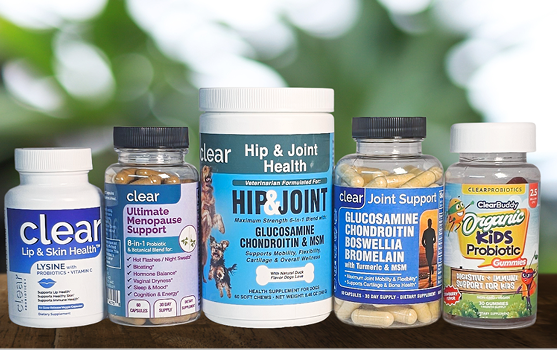
Clear Joint Support includes MSM alongside Glucosamine Sulfate Potassium, Chondroitin Sulfate, Turmeric, Boswellia, Quercetin, Bromelain, and L-Methionine, providing the foundational sulfur supply required for both collagen cross-linking and glycosaminoglycan sulfation across the formula's broader cartilage-support mechanisms.
Glossary of Key Terms
Methylsulfonylmethane (MSM) — An organic sulfur compound that provides bioavailable dietary sulfur, supporting collagen cross-linking, glycosaminoglycan sulfation, and glutathione synthesis, while also demonstrating independent anti-inflammatory activity in clinical research.
Disulfide Bonds — Covalent sulfur-sulfur bonds that cross-link collagen fibers together, contributing directly to collagen's mechanical tensile strength. Disulfide bond formation requires adequate dietary sulfur availability, typically supplied through sulfur-containing amino acids (methionine, cysteine) or compounds like MSM.
Sulfation — The biochemical process of attaching sulfate groups to glycosaminoglycan chains (including chondroitin sulfate and keratan sulfate), which determines their negative charge density and resulting water-retention capacity within cartilage. Sulfation requires adequate sulfur mineral availability throughout the body.
Glutathione — The body's primary intracellular antioxidant, synthesized from three amino acids including the sulfur-containing amino acid cysteine. Adequate glutathione synthesis supports chondrocyte resilience against the oxidative stress associated with inflamed or mechanically stressed joint tissue.
Creatine Kinase — An enzyme released into the bloodstream following muscle tissue damage, commonly used as a biomarker for exercise-induced muscle damage in research settings. MSM supplementation has been shown to reduce creatine kinase elevation following intense exercise, suggesting a protective effect on connective and muscle tissue during physical exertion.
Frequently Asked Questions
Q: What does MSM actually do for joint health?
MSM provides bioavailable dietary sulfur, a mineral required for collagen cross-linking (the disulfide bonds that give connective tissue its mechanical strength), glycosaminoglycan sulfation (the process that gives cartilage's structural polysaccharides their water-retaining negative charge), and glutathione synthesis (the body's primary antioxidant, which protects cartilage cells from oxidative stress). MSM has also demonstrated independent anti-inflammatory activity in clinical research, distinct from its sulfur-donation role.
Q: Is there clinical research supporting MSM for osteoarthritis?
Yes. A randomized, double-blind, placebo-controlled trial published in the International Journal of Medical Sciences found that MSM significantly reduced pain and improved physical function in knee osteoarthritis patients compared to placebo over a 12-week period. A separate trial examining MSM in combination with glucosamine found the combination produced the most pronounced improvement compared to either compound alone.
Q: Why is sulfur important for joints if it's rarely discussed in nutrition?
Sulfur is the third most abundant mineral in the human body by weight, and it plays a central but underappreciated role in connective tissue structure — specifically in collagen cross-linking and the sulfation of cartilage's structural glycosaminoglycan chains. Despite this importance, sulfur receives little mainstream nutritional attention, which is part of why MSM's specific contribution as a bioavailable dietary sulfur source is a meaningful, often-overlooked addition to a comprehensive joint formula.
Q: Can MSM help with exercise recovery, not just osteoarthritis?
Yes. A randomized, placebo-controlled study examining MSM supplementation in men completing a half-marathon found significant reductions in exercise-induced muscle damage markers (creatine kinase) and post-exercise pain scores compared to placebo, suggesting relevance to connective and muscle tissue recovery in physically active individuals, separate from its osteoarthritis-specific research.
Q: How long does MSM take to work for joint comfort?
Most clinical trials demonstrating benefit have measured outcomes over 8 to 12 weeks of consistent daily use, consistent with MSM's role in supporting an ongoing biological process (collagen and glycosaminoglycan synthesis) rather than producing an acute pharmacological effect.
These statements have not been evaluated by the Food and Drug Administration. This product is not intended to diagnose, treat, cure, or prevent any disease.
References: Kim LS et al. (2006). Efficacy of methylsulfonylmethane (MSM) in osteoarthritis pain of the knee. International Journal of Medical Sciences, 3(1), 13. | Usha PR & Naidu MU (2004). Randomised, double-blind, parallel, placebo-controlled study of oral glucosamine, methylsulfonylmethane and their combination in osteoarthritis. Clinical Drug Investigation, 24(6), 353–363. | Barmaki S et al. (2012). Effect of methylsulfonylmethane supplementation on exercise-induced muscle damage and total antioxidant capacity. Journal of Sports Medicine and Physical Fitness. | Butawan M et al. (2017). Methylsulfonylmethane: applications and safety of a novel dietary supplement. Nutrients, 9(3), 290.