





Quercetin: The Flavonoid That Stabilizes Mast Cells and Amplifies Curcumin's Effects
Quercetin is a flavonoid found in numerous plants — including onions, apples, and capers — that functions in joint health formulations through two distinct mechanisms: direct anti-inflammatory and antioxidant activity at the cellular level, including mast cell stabilization that reduces the histamine-driven swelling associated with active joint inflammation, and as a bioavailability enhancer for co-administered curcumin, extending curcumin's circulating half-life by inhibiting the sulfotransferase enzymes that would otherwise rapidly metabolize and inactivate it. This dual role — independent anti-inflammatory agent and pharmacokinetic amplifier for another formula ingredient — makes quercetin a more strategically positioned compound than its modest individual reputation in general nutrition conversation might suggest.
Quercetin is one of the most common flavonoids in the human diet, present in many fruits and vegetables, yet its specific relevance to joint inflammation formulations is rarely explained beyond a general "antioxidant" label. Its actual mechanisms are considerably more targeted — and its interaction with curcumin specifically is one of the more interesting examples of genuine ingredient synergy in joint health formulation.

Mast Cell Stabilization: Quercetin's Most Distinctive Joint-Relevant Mechanism
Mast cells are immune cells present throughout connective tissue, including the synovial membrane, that release histamine, prostaglandins, and other inflammatory mediators upon activation — a process called degranulation. While mast cells are most commonly discussed in the context of allergic reactions, they also play a meaningful role in joint inflammation, where their degranulation contributes to the swelling, increased vascular permeability, and inflammatory hypersensitivity that characterize actively inflamed joints.
Quercetin has documented mast cell-stabilizing activity — it inhibits the degranulation process, reducing the release of histamine and other inflammatory mediators from these cells. This mechanism is distinct from the COX-inhibiting activity of turmeric's curcumin and the 5-LOX-inhibiting activity of Boswellia's boswellic acids, representing a third, complementary anti-inflammatory pathway addressing the mast cell-mediated component of joint inflammation specifically.
Quercetin's Independent Antioxidant Activity
Beyond mast cell stabilization, quercetin is a potent free-radical scavenger in its own right. Chondrocytes operating under oxidative stress — a common condition in inflamed or mechanically stressed joints — produce reduced cartilage matrix and increased catabolic (degradative) enzyme output, accelerating the cartilage loss that defines progressive joint disease. Quercetin's antioxidant activity directly protects chondrocytes from this oxidative burden, supporting their continued capacity for normal synthetic function.
NF-κB Modulation: A Shared Mechanism With Curcumin
Quercetin also shares some of curcumin's NF-κB inhibitory activity, providing additive suppression of this upstream inflammatory transcription factor — the same pathway discussed extensively in connection with turmeric's joint health mechanism. NF-κB controls the gene expression of pro-inflammatory cytokines (IL-1β, IL-6, TNF-α) that drive both synovial inflammation and the matrix metalloproteinase production responsible for active cartilage degradation. Quercetin's contribution to NF-κB suppression, while generally considered less potent on a standalone basis than curcumin's, provides additive upstream anti-inflammatory coverage when the two compounds are combined in the same formula.
The Bioavailability Amplifier Role: Quercetin and Curcumin
This is perhaps quercetin's most formulation-significant and least widely understood mechanism. Curcumin has notoriously poor standalone bioavailability — it is rapidly metabolized in the liver and intestinal wall, with a substantial proportion of any ingested dose converted into inactive metabolites before it can exert meaningful systemic effects.
One of the specific metabolic pathways responsible for this rapid curcumin inactivation involves sulfotransferase enzymes, which attach sulfate groups to curcumin molecules, marking them for elimination. Quercetin has been shown to inhibit these sulfotransferase enzymes, competing for the same enzymatic machinery that would otherwise rapidly process and inactivate curcumin. By reducing this competing metabolic pathway, quercetin extends curcumin's circulating half-life and increases the proportion of an ingested curcumin dose that remains in its active form for a longer period.
This is a genuinely synergistic relationship rather than a coincidental ingredient pairing: quercetin's presence in a formula alongside turmeric curcumin measurably amplifies curcumin's own anti-inflammatory contribution, beyond whatever independent benefit quercetin itself provides.
The Research Context
Quercetin's research base in joint health specifically is less extensive than the dedicated, large-scale randomized controlled trials available for glucosamine, chondroitin, or Boswellia — it is more typically studied as part of a combination formula, or in the context of its bioavailability-enhancing interaction with curcumin, rather than as a standalone joint health intervention with its own dedicated large trials. This does not diminish its relevance; rather, it reflects quercetin's specific formulation role as a complementary and amplifying compound rather than a primary, independently-proven structural or anti-inflammatory agent in the way glucosamine, chondroitin, and Boswellia have been independently validated.
Quercetin's broader research base — across cardiovascular, allergic, and general anti-inflammatory contexts — consistently supports its mast cell-stabilizing, antioxidant, and mild anti-inflammatory mechanisms, providing strong mechanistic plausibility for its inclusion in a joint formula even in the relative absence of joint-specific large-scale clinical trials.
Why Quercetin's Presence Strengthens the Whole Formula
Within a comprehensive joint formula, quercetin's value is best understood in two parts: its own direct contribution (mast cell stabilization, antioxidant protection, mild NF-κB suppression) and its amplifying effect on curcumin specifically. This second role means quercetin's presence effectively increases the practical potency of the formula's turmeric component beyond what the labeled curcumin dose alone would suggest — a detail that is easy to overlook when evaluating ingredient lists item by item rather than considering how compounds interact pharmacokinetically.
Dosing and Timeline
Quercetin doses in joint and general anti-inflammatory formulas commonly range from 250 mg to 500 mg daily. Because a meaningful portion of quercetin's relevant contribution is its bioavailability-enhancing effect on curcumin, its practical benefit is best evaluated in the context of the full formula's effects over the same 4-to-8-week timeline typically associated with the anti-inflammatory components of a comprehensive joint product, rather than in isolation.
Safety Considerations
Quercetin has a favorable safety profile at standard supplemental doses, with mild gastrointestinal upset and headache reported in a small minority of users at higher doses. Because quercetin affects certain liver metabolic enzymes (including the sulfotransferase pathway discussed above, as well as some cytochrome P450 activity), individuals taking medications with narrow therapeutic windows should be aware of the theoretical potential for altered drug metabolism and may wish to discuss this with their healthcare provider or pharmacist.
Clear Wellness 360 Products with Quercetin
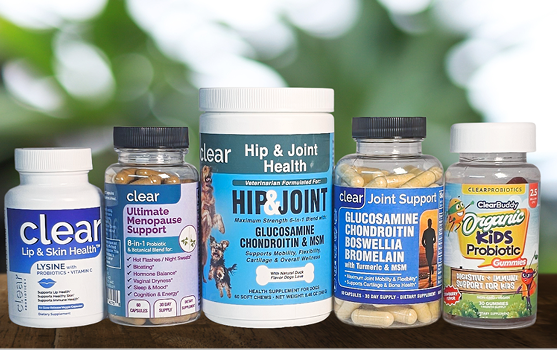
Clear Joint Support includes quercetin alongside Glucosamine Sulfate Potassium, Chondroitin Sulfate, MSM, Turmeric, Boswellia, Bromelain, and L-Methionine — providing mast cell-stabilizing and antioxidant activity while specifically amplifying the bioavailability and effectiveness of the formula's turmeric curcumin component.
Glossary of Key Terms
Mast Cells — Immune cells present throughout connective tissue, including the synovial membrane, that release histamine, prostaglandins, and other inflammatory mediators upon activation (degranulation). Mast cell activity contributes to swelling and inflammatory hypersensitivity in actively inflamed joints.
Degranulation — The process by which mast cells release their stored inflammatory mediators (histamine, prostaglandins, and others) in response to activation. Quercetin's mast cell-stabilizing activity inhibits this degranulation process.
Sulfotransferase Enzymes — Liver and intestinal enzymes responsible for attaching sulfate groups to various compounds, including curcumin, marking them for elimination from the body. This is one of the primary metabolic pathways responsible for curcumin's notoriously poor standalone bioavailability. Quercetin inhibits these enzymes, extending curcumin's circulating active half-life.
Bioavailability — The proportion of an ingested compound that reaches systemic circulation in an active form, capable of exerting its intended biological effects. Curcumin has inherently low bioavailability due to rapid metabolism; quercetin (along with piperine, discussed in the context of other formulas) is one of several known bioavailability-enhancing co-compounds for curcumin specifically.
NF-κB (Nuclear Factor Kappa B) — A transcription factor controlling the gene expression of pro-inflammatory cytokines, including those that drive both synovial inflammation and matrix metalloproteinase production. Quercetin shares some of curcumin's NF-κB inhibitory activity, contributing additive upstream anti-inflammatory suppression.
Frequently Asked Questions
Q: What does quercetin actually do for joint health?
Quercetin contributes through several mechanisms: it stabilizes mast cells, reducing the histamine and inflammatory mediator release that contributes to joint swelling and hypersensitivity; it has direct antioxidant activity that protects cartilage cells (chondrocytes) from oxidative stress; it shares some of curcumin's NF-κB inhibitory activity; and — perhaps most distinctively — it inhibits the sulfotransferase enzymes that would otherwise rapidly metabolize and inactivate co-administered curcumin, effectively amplifying curcumin's anti-inflammatory contribution within the same formula.
Q: Why is quercetin combined with turmeric specifically?
Because quercetin inhibits the sulfotransferase enzymes responsible for rapidly metabolizing and inactivating curcumin, curcumin's primary bioactive compound. This means quercetin's presence extends curcumin's circulating active half-life, increasing the practical effectiveness of the formula's turmeric component beyond what the labeled curcumin dose alone would suggest — a genuine pharmacokinetic synergy rather than a coincidental ingredient pairing.
Q: Is there strong clinical research on quercetin specifically for joint pain?
Quercetin's dedicated, joint-specific clinical trial base is less extensive than the large-scale research available for glucosamine, chondroitin, or Boswellia. It is more typically studied and used as a complementary compound within combination formulas, leveraging its mast cell-stabilizing, antioxidant, and curcumin-amplifying mechanisms rather than as an independently proven standalone joint health intervention with its own dedicated large trials.
Q: What foods naturally contain quercetin?
Quercetin is found in numerous common foods, including onions (particularly red onions), apples, berries, capers, and many leafy green vegetables. Dietary intake alone, however, typically provides considerably lower quercetin amounts than the standardized doses used in supplement formulations and most available research.
Q: Are there any safety considerations with quercetin?
Quercetin has a favorable safety profile at standard supplemental doses, with mild gastrointestinal upset reported in a small minority of users at higher doses. Because quercetin affects certain liver metabolic enzymes, individuals taking medications with narrow therapeutic windows should be aware of the theoretical potential for altered drug metabolism and may wish to discuss this with their healthcare provider or pharmacist.
These statements have not been evaluated by the Food and Drug Administration. This product is not intended to diagnose, treat, cure, or prevent any disease.
References: Li Y et al. (2016). Quercetin, inflammation and immunity. Nutrients, 8(3), 167. | Cai X et al. (2013). Bioavailability of quercetin: problems and promises. Current Medicinal Chemistry, 20(20), 2572–2582. | Shoba G et al. (1998). Influence of piperine on the pharmacokinetics of curcumin in animals and human volunteers. Planta Medica, 64(4), 353–356. | Tieppo J et al. (2009). Quercetin administration ameliorates inflammation. Toxicology Letters.