





Red Clover Isoflavones: The Plant Estrogen With the Clearest Mechanism in Menopause Research
Red clover (Trifolium pratense) is one of the richest dietary sources of isoflavones - plant compounds with a genuinely estrogenic mechanism of action, unlike several other botanicals commonly grouped with it in menopause formulas. Red clover’s four primary isoflavones (biochanin A, formononetin, genistein, and daidzein) bind preferentially to estrogen receptor beta (ERβ) over estrogen receptor alpha (ERα) - a selectivity pattern that produces tissue-selective estrogenic activity concentrated in bone, cardiovascular, and vasomotor symptom-relevant tissue, with comparatively less activity in breast and uterine tissue where ERα predominates. This selective receptor binding profile is the most mechanistically distinct and best-characterized estrogenic activity of any commonly used menopause botanical, and it is the basis for red clover’s research focus on bone density preservation, cardiovascular markers, and hot flash frequency.
Red clover occupies a unique position in the menopause botanical landscape: unlike black cohosh and Dong Quai, whose presumed estrogenic mechanisms have been substantially revised by more recent receptor-binding research, red clover’s estrogenic activity is genuinely well-established and mechanistically specific. This makes it a useful contrast case for understanding what true phytoestrogen activity looks like - and why the distinction between ERα and ERβ selectivity matters enormously for both efficacy and safety conversations.

The Isoflavone Profile: Four Distinct Compounds
Red clover’s isoflavone content is more diverse than that of soy (the most commonly discussed dietary isoflavone source), which typically contains primarily genistein and daidzein. Red clover additionally contains substantial amounts of biochanin A and formononetin - precursor compounds that are metabolized in the gut to genistein and daidzein, respectively, through the action of specific gut bacteria.
Genistein is the most extensively studied isoflavone overall, with the strongest individual evidence base for bone density preservation and cardiovascular marker improvement.
Daidzein is metabolized by certain gut bacteria into equol - a more potently estrogenic compound than daidzein itself. Only an estimated 30-50% of the population harbors the specific gut bacteria capable of efficiently converting daidzein to equol, meaning the clinical response to red clover may vary significantly between individuals based on their gut microbiome composition.
Biochanin A and Formononetin serve partly as precursor reservoirs, providing sustained substrate for ongoing genistein and daidzein production as they are metabolized over time.
Why ERβ Selectivity Is the Single Most Important Fact About Red Clover
The human body has two primary estrogen receptor subtypes, and understanding their different tissue distributions is essential to understanding both red clover’s benefits and its safety profile.
Estrogen Receptor Alpha (ERα) is the dominant estrogen receptor subtype in breast tissue and the uterine endometrium. Most concerns about estrogenic compounds and hormone-sensitive cancer risk relate specifically to ERα activation in these tissues.
Estrogen Receptor Beta (ERβ) is the dominant estrogen receptor subtype in bone tissue, cardiovascular tissue, and notably in the hypothalamus - the brain region responsible for the thermoregulatory dysregulation that produces hot flashes.
Red clover’s isoflavones bind preferentially to ERβ over ERα - a selectivity ratio specifically measured and confirmed in receptor-binding studies. This means red clover’s estrogenic activity is disproportionately concentrated in the tissues where ERβ predominates (bone, cardiovascular, hypothalamic) and comparatively limited in the tissues where ERα predominates (breast, endometrium).
This selectivity is the scientific basis for describing red clover’s isoflavones as Selective Estrogen Receptor Modulators (SERMs) of a sort - producing estrogen-like benefits in specific tissues without the same magnitude of activity in tissues where estrogenic stimulation carries the most concern.
The Clinical Evidence
Bone Density: Several randomized controlled trials have examined red clover isoflavones for bone mineral density preservation in postmenopausal women. A number of these trials have found significant reductions in bone density loss at the lumbar spine compared to placebo over 12-month periods, consistent with the ERβ-mediated mechanism.
Cardiovascular Markers: Red clover isoflavone supplementation has been studied for its effects on arterial stiffness and lipid profiles, with several trials finding improvements in flow-mediated dilation and modest favorable shifts in LDL and HDL cholesterol.
Hot Flash Frequency: The evidence for red clover’s direct effect on hot flash frequency is more mixed. Some trials found significant reductions in vasomotor symptom frequency and severity; others found effects not significantly different from placebo. This variability is at least partially explained by the equol-conversion factor.
The Soy-Red Clover Distinction
Red clover is frequently compared to soy isoflavones because both are dietary isoflavone sources, but there are meaningful differences. Red clover’s isoflavone profile is more heavily weighted toward biochanin A and formononetin (precursor compounds), while soy is more heavily weighted toward genistein and daidzein directly.
Safety Considerations
Because red clover has genuine, measurable estrogen receptor activity, it warrants a careful safety conversation regarding hormone-sensitive conditions. The ERβ-selective binding profile is reassuring relative to non-selective estrogenic compounds, but does not eliminate ERα activity entirely. Women with a personal history of estrogen-receptor-positive breast cancer should discuss red clover use with their oncology team. Red clover also contains coumarin-related compounds with mild blood-thinning properties, relevant for anyone taking anticoagulant or antiplatelet medications.
Clear Wellness 360 Products with Red Clover
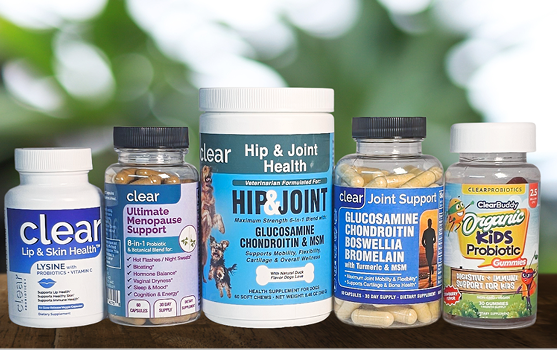
Clear Menopause Support includes red clover within its 8-in-1 botanical and probiotic formula, contributing ERβ-selective isoflavone activity relevant to bone, cardiovascular, and vasomotor symptom support.
Glossary of Key Terms
Isoflavones - Plant-derived polyphenol compounds with estrogen-like structural properties, found in high concentrations in red clover and soy.
Estrogen Receptor Beta (ERβ) - One of two primary human estrogen receptor subtypes, predominantly expressed in bone, cardiovascular tissue, and the hypothalamus.
Equol - A more potently estrogenic metabolite produced when specific gut bacteria convert the isoflavone daidzein. Only an estimated 30-50% of people harbor the gut bacteria capable of efficient equol conversion.
Selective Estrogen Receptor Modulator (SERM) - A compound that activates estrogen receptors in some tissues while having minimal or antagonist activity in others.
Frequently Asked Questions
Q: Is red clover the same as other phytoestrogen herbs like black cohosh?
No. Red clover has genuinely well-documented estrogen receptor binding activity, unlike black cohosh and Dong Quai, whose presumed estrogenic mechanisms have been substantially revised. Red clover’s isoflavones bind estrogen receptors with a documented preference for ERβ over ERα.
Q: Does red clover help with hot flashes?
The evidence is more mixed for red clover’s direct effect on hot flash frequency compared to its evidence for bone density and cardiovascular markers. Some trials show significant improvement; others show no significant difference from placebo. This inconsistency is partially explained by individual variation in gut bacteria capable of converting daidzein to the more potently estrogenic compound equol.
Q: Is red clover safe for women with a history of breast cancer?
This requires a direct conversation with an oncology care team. While red clover’s ERβ-selective binding profile is reassuring, it does retain some ERα activity, and current research has not produced a conclusive consensus on isoflavone safety for women with a personal history of hormone-sensitive breast cancer.
Q: What does red clover do for bone health?
Red clover’s ERβ-selective isoflavones have been studied in randomized controlled trials for bone mineral density in postmenopausal women, with several trials finding significantly reduced bone loss at the lumbar spine over 12-month periods compared to placebo.
Q: Why do some people respond better to red clover than others?
A significant factor is gut microbiome composition. The isoflavone daidzein is converted by specific gut bacteria into equol - a considerably more potently estrogenic compound. Only an estimated 30-50% of people harbor the bacterial strains capable of efficient equol conversion.
These statements have not been evaluated by the Food and Drug Administration. This product is not intended to diagnose, treat, cure, or prevent any disease.
References: Atkinson C et al. (2004). American Journal of Clinical Nutrition, 79(2), 326-333. | Setchell KD & Cole SJ (2006). Journal of Nutrition, 136(8), 2188-2193. | Lipovac M et al. (2012). Gynecological Endocrinology, 28(3), 203-207. | Mueller SO et al. (2004). Journal of Steroid Biochemistry and Molecular Biology.