





Vitamin C: The Collagen Cofactor and Immune Cell Concentrator Behind Skin and Cold Sore Defense
Vitamin C (ascorbic acid) is a water-soluble vitamin with two distinct and clinically significant biological roles relevant to skin and immune health: it serves as the essential enzymatic cofactor for prolyl and lysyl hydroxylase - the enzymes required to form the cross-linking bonds that give collagen its tensile strength - and it is actively concentrated by immune cells to levels 10 to 100 times higher than surrounding plasma, supporting lymphocyte function, antibody production, and the type I interferon response that represents the body's first line of defense against viral reactivation. This dual mechanism explains why Vitamin C appears specifically in skin-health and antiviral-defense formulations rather than as a generic, catch-all addition.
Vitamin C is among the most universally recognized nutrients in popular health conversation, frequently associated in shorthand with "immune support" without much specificity about mechanism. The reality of its biological activity is considerably more precise - and understanding that precision explains exactly why it is formulated alongside specific companion ingredients like L-Lysine and targeted probiotic strains, rather than included as an undifferentiated general wellness addition.

The Collagen Connection: Why Vitamin C Is Required, Not Just Helpful
Collagen is the most abundant protein in the human body and the primary structural protein of skin, connective tissue, and the mucosal surfaces of the lips and mouth. Its mechanical strength comes from a specific structural feature: triple-helix collagen molecules are cross-linked together through covalent bonds, and the formation of those bonds depends entirely on two enzymes that cannot function without Vitamin C.
Prolyl hydroxylase and lysyl hydroxylase are enzymes responsible for hydroxylating (adding a hydroxyl group to) specific proline and lysine amino acid residues within the developing collagen molecule, producing hydroxyproline and hydroxylysine. These hydroxylated amino acids are essential for stabilizing the collagen triple helix and forming the cross-linking bonds between adjacent collagen fibers that give mature collagen its tensile strength.
Both of these enzymes require Vitamin C as an essential cofactor. Without adequate Vitamin C, collagen synthesis continues at the level of basic amino acid assembly, but the resulting collagen is structurally unstable and mechanically weak - unable to form the necessary cross-links. This is why severe Vitamin C deficiency (scurvy) produces such dramatic connective tissue symptoms, including poor wound healing, bleeding gums, and skin fragility - all direct consequences of collagen that cannot achieve normal structural integrity.
The practical implication for skin and lip health: L-Lysine (a primary structural amino acid in collagen, discussed in its own dedicated context) provides the raw material for collagen synthesis, but Vitamin C provides the enzymatic activation required to actually build mechanically sound collagen from that raw material. The two nutrients are functionally interdependent - abundant lysine without adequate Vitamin C still produces structurally compromised collagen, and adequate Vitamin C without sufficient lysine has no substrate to act upon.
The Immune Concentration Mechanism: Why Vitamin C Matters for Viral Defense
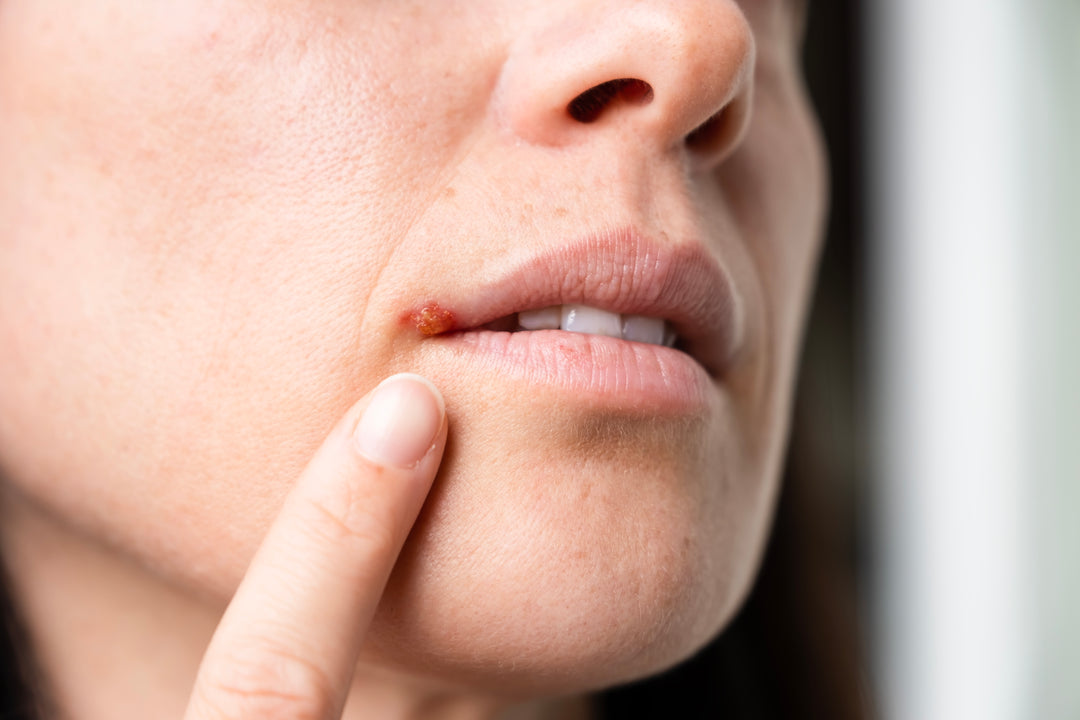
Beyond its structural collagen role, Vitamin C has a second, mechanistically distinct function relevant to immune defense against viral reactivation - including the herpes simplex virus (HSV-1) reactivation responsible for cold sores.
Immune cells possess active transport mechanisms (specifically, sodium-dependent vitamin C transporters, or SVCTs) that concentrate ascorbate to intracellular levels 10 to 100 times higher than the surrounding blood plasma. This dramatic concentration gradient is not incidental - it reflects a genuine cellular requirement for high intracellular Vitamin C during immune activation, when cells generate substantial oxidative byproducts as part of their antimicrobial and antiviral functions.
This concentrated Vitamin C supports several specific immune functions:
Type I Interferon Production: Type I interferons (IFN-α and IFN-β) are the primary antiviral cytokines produced in the earliest stages of viral reactivation, signaling neighboring cells to enter an antiviral state before adaptive immune responses have time to mobilize. Vitamin C supports the cellular signaling pathways involved in interferon production, contributing to a faster and more robust early antiviral response - directly relevant to containing HSV-1 reactivation before it progresses to a clinically visible outbreak.
Lymphocyte Function and Proliferation: Vitamin C supports the proliferation and functional maturation of lymphocytes, including the CD8+ cytotoxic T lymphocytes that provide ongoing surveillance against latent HSV-1 at the trigeminal ganglion - the site of viral latency between outbreaks.
Phagocyte Function: Neutrophils and macrophages - the immune cells responsible for engulfing and destroying pathogens - accumulate particularly high intracellular Vitamin C concentrations, supporting their oxidative burst capacity (the production of reactive oxygen species used to destroy engulfed pathogens) while Vitamin C's antioxidant activity simultaneously protects the phagocyte's own cellular structures from collateral oxidative damage during this process.
Antioxidant Protection During Active Immune Responses: When an outbreak does occur, the local immune response generates oxidative byproducts that can cause collateral damage to healthy surrounding tissue alongside the infected cells. Vitamin C's antioxidant activity helps limit this bystander damage, supporting faster overall resolution of the affected tissue.
Why Vitamin C Is Specifically Relevant to Cold Sore and Skin Formulas
The combination of Vitamin C's two distinct mechanisms - structural collagen support and concentrated immune cell function - makes it specifically and mechanistically relevant to formulas targeting both skin integrity and cold sore (HSV-1) defense, rather than a generic addition included simply for its broad reputation.
In a formula also containing L-Lysine (which competes with arginine for cellular uptake, limiting the substrate HSV-1 needs to replicate) and targeted probiotic strains (which support the gut-associated immune surveillance that keeps latent HSV-1 suppressed), Vitamin C contributes a third, complementary layer: supporting the type I interferon and lymphocyte function that determines how effectively the immune system responds once viral reactivation has begun, while simultaneously supporting the structural collagen integrity of the lip and skin tissue where outbreaks occur - directly relevant to both outbreak severity and the speed of subsequent tissue recovery.
Forms and Absorption
Vitamin C is available in several supplemental forms, with ascorbic acid being the most common, well-researched, and cost-effective form. Buffered forms (such as sodium or calcium ascorbate) are sometimes used to reduce the gastrointestinal acidity some individuals experience with high-dose ascorbic acid, though this does not meaningfully change Vitamin C's fundamental biological activity once absorbed. Vitamin C absorption occurs primarily through active transport in the small intestine, and absorption efficiency decreases at very high single doses - a consideration relevant to dosing strategy, with many practitioners recommending divided doses across the day for higher total intake rather than a single very large dose.
Safety Considerations
Vitamin C has an excellent safety profile, being water-soluble and readily excreted by the kidneys when intake exceeds the body's current capacity to use or store it. The most commonly reported side effect at high doses is gastrointestinal upset, including diarrhea, related to the osmotic effect of unabsorbed Vitamin C in the intestine - a self-limiting effect that resolves with dose reduction. Individuals with a history of kidney stones (particularly oxalate stones) should be aware that very high-dose Vitamin C supplementation can increase oxalate excretion in some individuals, and may wish to discuss appropriate dosing with their healthcare provider.
Clear Wellness 360 Products with Vitamin C
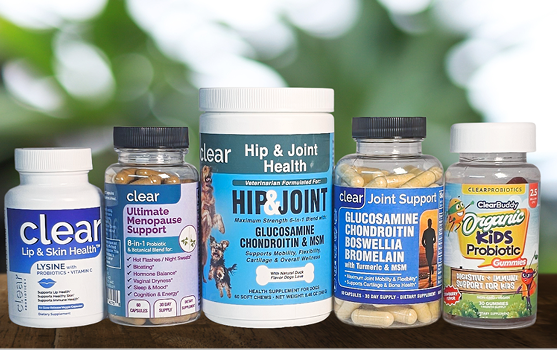
Clear Lip & Skin Health includes Vitamin C alongside L-Lysine and targeted probiotic strains (Lactobacillus rhamnosus LGG and L. acidophilus), supporting both the structural collagen integrity of lip and skin tissue and the type I interferon and lymphocyte function relevant to HSV-1 viral surveillance and cold sore defense.
→ View Clear Lip & Skin Health
Glossary of Key Terms
Ascorbic Acid - The most common and well-researched chemical form of supplemental Vitamin C. Once absorbed, it functions identically regardless of the specific salt or buffered form in which it was originally formulated.
Prolyl Hydroxylase and Lysyl Hydroxylase - Enzymes responsible for hydroxylating specific proline and lysine residues within developing collagen molecules, a modification essential for collagen's structural stability and its capacity to form cross-linking bonds. Both enzymes require Vitamin C as an essential cofactor; without it, collagen synthesis produces structurally weak, poorly cross-linked collagen.
Hydroxyproline and Hydroxylysine - Modified amino acids produced through Vitamin C-dependent enzymatic hydroxylation, required for stabilizing the collagen triple helix and forming the cross-linking bonds between collagen fibers that give mature collagen its tensile strength.
Sodium-Dependent Vitamin C Transporters (SVCTs) - Active transport proteins that allow immune cells to concentrate intracellular ascorbate to levels 10 to 100 times higher than surrounding blood plasma, reflecting a genuine cellular requirement for elevated Vitamin C during immune activation and oxidative immune functions.
Type I Interferons (IFN-α/β) - Antiviral cytokines produced in the earliest stages of viral reactivation, signaling neighboring cells to enter an antiviral state before adaptive immune responses mobilize. Vitamin C supports the cellular signaling pathways involved in interferon production.
Oxidative Burst - The production of reactive oxygen species by neutrophils and macrophages as a mechanism for destroying engulfed pathogens. Vitamin C's high concentration in these cells supports this antimicrobial function while also providing antioxidant protection against collateral cellular damage.
Scurvy - The clinical disease resulting from severe Vitamin C deficiency, characterized by poor wound healing, bleeding gums, and skin fragility - all direct consequences of structurally compromised collagen resulting from inadequate hydroxylase enzyme cofactor activity.
Frequently Asked Questions
Q: Why is Vitamin C important for skin and lip health specifically?
Vitamin C is the essential cofactor for prolyl and lysyl hydroxylase, the enzymes responsible for forming the cross-linking bonds that give collagen its structural strength. Without adequate Vitamin C, collagen synthesis is incomplete - the basic protein is assembled but lacks the structural cross-links needed for mechanical integrity. This makes Vitamin C directly relevant to skin elasticity, lip tissue structure, and wound healing at the site of any skin or lip irritation, including cold sore lesions.
Q: How does Vitamin C support the immune system against viral reactivation?
Immune cells actively concentrate Vitamin C to levels 10 to 100 times higher than surrounding blood plasma, reflecting a genuine functional requirement. This concentrated Vitamin C supports type I interferon production (the earliest antiviral cytokine response to viral reactivation), lymphocyte proliferation and function (including the T cells that provide ongoing surveillance against latent viruses like HSV-1), and the antimicrobial oxidative burst function of neutrophils and macrophages.
Q: Why is Vitamin C paired with L-Lysine in cold sore formulas?
The two nutrients are functionally interdependent for collagen synthesis. L-Lysine provides a primary structural amino acid building block for collagen, while Vitamin C provides the enzymatic cofactor activity required to actually form the structurally sound, cross-linked collagen from that raw material. Abundant lysine without adequate Vitamin C still produces weak collagen; Vitamin C without sufficient lysine has no substrate to act on. Together, they address both the materials and the assembly process.
Q: How much Vitamin C should I take daily?
Standard supplemental doses for general health and immune support commonly range from 500 mg to 1,000 mg daily, often divided into multiple doses given that absorption efficiency decreases at very high single doses. The recommended dietary allowance set by health authorities is considerably lower (75-90 mg for most adults), but many supplement and clinical research protocols use higher doses for the specific immune and collagen-support applications discussed in this article.
Q: Is high-dose Vitamin C safe?
Vitamin C has an excellent overall safety profile, being water-soluble and readily excreted by the kidneys when intake exceeds what the body currently needs. The most common side effect at high doses is gastrointestinal upset, including diarrhea, which is self-limiting and resolves with dose reduction. Individuals with a history of oxalate kidney stones should be aware that very high-dose Vitamin C can increase oxalate excretion in some individuals and may wish to discuss appropriate dosing with their healthcare provider.
These statements have not been evaluated by the Food and Drug Administration. This product is not intended to diagnose, treat, cure, or prevent any disease.
References: Carr AC & Maggini S (2017). Vitamin C and immune function. Nutrients, 9(11), 1211. | Pullar JM et al. (2017). The roles of vitamin C in skin health. Nutrients, 9(8), 866. | Murad S et al. (1981). Regulation of collagen synthesis by ascorbic acid. PNAS, 78(5), 2879-2882. | Hemilä H (2017). Vitamin C and infections. Nutrients, 9(4), 339.