






Glucosamine and Chondroitin: What 20 Years of Research Actually Shows
Glucosamine sulfate and chondroitin sulfate are the most extensively studied nutritional compounds for joint health in the world, with more than two decades of randomized controlled trials, systematic reviews, and long-term cohort studies behind them. The most rigorous human evidence - including the NIH-funded GAIT trial (1,583 participants), the LEGS trial, and multiple European prescription-grade studies - supports their use for cartilage matrix maintenance, reduction of joint space narrowing, and clinically meaningful pain reduction in individuals with moderate-to-severe knee and hip joint deterioration. Their effects are structural and cumulative rather than acute, requiring consistent daily use over 3-6 months to produce the most significant benefits - but producing outcomes that no short-term analgesic can achieve: measurable preservation of joint architecture over time.
Glucosamine and chondroitin are not new supplement trends. They are among the most studied compounds in the entire nutritional supplement industry, with a research history that predates most modern nutraceuticals. That research history is also more nuanced than most supplement marketing suggests - some trials show strong benefit, others are equivocal, and understanding the reasons for those differences is the most useful thing anyone with joint pain can know before making a supplementation decision.
This article reviews the human clinical evidence accurately and in full - including the findings that are complicated - and explains why the form, dose, and combination of these compounds determines whether research results translate to real-world benefit.
The Biology: What Glucosamine and Chondroitin Actually Do in Joints
Before evaluating the research, the mechanisms deserve a clear explanation - because understanding what these compounds are doing in joint tissue explains both why the research is positive and why it takes months to see results.
Glucosamine Sulfate: Rebuilding the Cartilage Matrix
Glucosamine is an amino monosaccharide - a simple sugar molecule with an amino group attached - that is the primary biochemical precursor for the synthesis of glycosaminoglycans, the long-chain polysaccharides that form the structural backbone of aggrecan and other proteoglycans in articular cartilage.
Think of articular cartilage as a densely packed molecular sponge. The sponge's ability to absorb compressive forces depends on its water content, which is maintained by aggrecan - a massive proteoglycan molecule that acts like a molecular water trap, holding water inside the cartilage matrix under compressive load. Glucosamine is the raw material the body uses to build aggrecan.
When cartilage is damaged or degenerating, aggrecan content decreases. The cartilage loses its ability to hold water, becoming thinner, stiffer, and less able to distribute load - which accelerates surface wear and brings bone closer to bone. Supplementing glucosamine provides the substrate chondrocytes need to restore aggrecan production and maintain the cartilage matrix.
The sulfate group in glucosamine sulfate is not incidental. Sulfate is required for the sulfation of glycosaminoglycan chains - a modification that determines their charge density, water-binding capacity, and structural function within the cartilage matrix. This is why glucosamine sulfate has a more consistent research track record than glucosamine hydrochloride, which lacks this sulfate contribution.
Chondroitin Sulfate: Hydration, Cushioning, and Enzyme Defense
Chondroitin sulfate is a sulfated glycosaminoglycan that is the primary structural component of aggrecan itself - not just a precursor like glucosamine, but the actual molecular building block of the cartilage proteoglycan responsible for the tissue's compressive resilience.
Chondroitin works through two mechanisms:
Structural: It provides the glycosaminoglycan chains that give aggrecan its water-trapping capacity. More chondroitin availability means more aggrecan can be synthesized and maintained, which means better cartilage hydration and cushioning.
Protective: Chondroitin sulfate inhibits the matrix metalloproteinase enzymes (specifically MMP-3 and MMP-13) that actively degrade cartilage collagen. In inflamed joints, these enzymes are overexpressed and cause accelerated cartilage breakdown. Chondroitin's MMP inhibition directly reduces this destructive process - which is why chondroitin is sometimes described as having both anabolic (building) and anti-catabolic (protecting) activity in cartilage.
The combination of glucosamine (precursor for proteoglycan synthesis) and chondroitin (structural component of proteoglycans + MMP inhibition) is more complete than either alone - which is exactly what the clinical trial data shows.

The Research: An Honest Summary
The GAIT Trial - The Most Important US Study
The Glucosamine/Chondroitin Arthritis Intervention Trial (GAIT) was funded by the National Institutes of Health and published in the New England Journal of Medicine in 2006. It enrolled 1,583 patients with symptomatic knee osteoarthritis, the largest randomized controlled trial of these compounds ever conducted in the United States.
The headline finding was that glucosamine alone and chondroitin alone showed modest benefits compared to placebo overall - but the subgroup of patients with moderate-to-severe knee pain showed a 79.2% response rate with the glucosamine + chondroitin combination versus a 54.3% response rate with placebo.
The nuance that most summaries miss: the trial used glucosamine hydrochloride, not glucosamine sulfate - the form used in the European trials showing the strongest efficacy. Multiple researchers have argued that the use of glucosamine HCl rather than glucosamine sulfate understates the compound's true benefit, because the sulfate group contributes independently to cartilage synthesis.
The bottom line from GAIT: the combination of glucosamine + chondroitin shows clinically meaningful benefit for moderate-to-severe joint pain, outperforming placebo by a margin comparable to prescription COX-2 inhibitors - without the cardiovascular and gastrointestinal risks associated with long-term NSAID use.
The European Prescription-Grade Trials - Stronger Findings
In Europe, glucosamine sulfate has been studied as a prescription pharmaceutical rather than an over-the-counter supplement, allowing more rigorous dose control and longer study periods.
The Pavelka et al. trial (2002, Archives of Internal Medicine): 202 patients with knee osteoarthritis randomized to 1,500mg glucosamine sulfate or placebo for 3 years. The glucosamine group showed significant reduction in joint space narrowing compared to placebo - the first long-term evidence that glucosamine sulfate may slow the structural progression of osteoarthritis.
The Reginster et al. trial (2001, Lancet): 212 patients randomized to 1,500mg glucosamine sulfate or placebo for 3 years. The glucosamine group showed significantly less joint space narrowing and significantly better pain and function scores. Average joint space decreased by 0.31mm in the placebo group and increased (improved) by 0.04mm in the glucosamine group.
These long-term structural findings are arguably the most important in the entire glucosamine literature - they suggest that consistent glucosamine sulfate use may genuinely slow joint deterioration rather than simply masking symptoms.
The LEGS Trial - Chondroitin's Independent Evidence
The Long-Term Evaluation of Glucosamine Sulfate (LEGS) trial, published in Annals of the Rheumatic Diseases (2014), evaluated chondroitin sulfate alongside glucosamine in 605 patients with knee osteoarthritis over 2 years. Chondroitin sulfate (800mg daily) significantly reduced cartilage volume loss compared to placebo - confirming its role in preserving cartilage architecture beyond symptom management.
Systematic Reviews and Meta-Analyses
Multiple Cochrane reviews and independent meta-analyses have examined the glucosamine and chondroitin literature. The most current consensus position, reflected in guidelines from the European League Against Rheumatism (EULAR) and the Osteoarthritis Research Society International (OARSI), is that pharmaceutical-grade glucosamine sulfate and chondroitin sulfate have sufficient evidence to be recommended as symptomatic slow-acting drugs for osteoarthritis (SYSADOAs).
Why Form and Dose Matter More Than Most People Realize
The inconsistency in the glucosamine research literature is not a sign that the compound does not work - it largely reflects differences in the form, dose, and combination used across trials.
Form: Glucosamine sulfate is the evidence-supported form. Multiple comparative analyses have found that glucosamine HCl trials show weaker results than glucosamine sulfate trials. A supplement that says "glucosamine" without specifying the form may be using the less effective hydrochloride salt.
Dose: 1,500mg of glucosamine sulfate daily is the dose used in the most positive clinical trials. Lower doses are not supported by the same evidence base.
Chondroitin dose: Effective doses in trials range from 800mg to 1,200mg daily. Token chondroitin inclusions at 50-100mg per serving will not replicate clinical trial results.
Combination vs. single ingredient: The GAIT trial found the strongest results for the glucosamine + chondroitin combination in moderate-to-severe pain - their complementary mechanisms produce additive benefits that single-ingredient products cannot replicate.
The Anti-Inflammatory Layer: Why Glucosamine and Chondroitin Are Not Enough Alone
The clinical research on glucosamine and chondroitin makes clear that these compounds primarily address the structural dimension of joint health. They do not directly address the inflammatory dimension - synovial inflammation, cytokine overexpression, and prostaglandin production that drive joint pain.
This is why the most advanced joint formulas combine glucosamine and chondroitin with compounds that directly target inflammatory pathways - Boswellia (5-LOX inhibition), turmeric curcuminoids (COX-2 and NF-kB inhibition), quercetin (antioxidant and cytokine modulation), and bromelain (proteolytic enzyme and absorption enhancer).
Clear Joint Support: Research-Dosed Glucosamine Sulfate at the Foundation
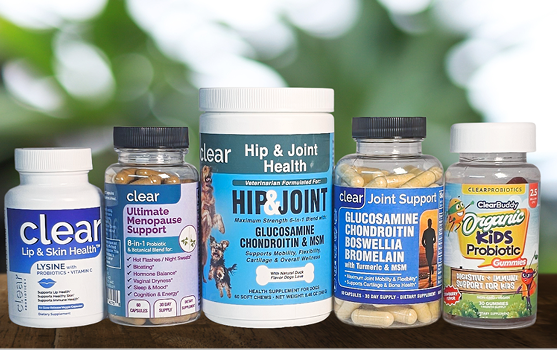
Clear Joint Support (Clear Wellness 360) uses Glucosamine Sulfate Potassium at the research-validated 1,500mg daily dose. Paired with Chondroitin Sulfate, MSM, Turmeric 4:1 Extract, Boswellia 65% Boswellic Acids, Quercetin, Bromelain, and L-Methionine across 8 mechanisms. Shellfish-free. Non-GMO, gluten-free, dairy-free. Manufactured in a GMP-certified USA facility, third-party tested.
View Clear Joint Support on Amazon
Frequently Asked Questions
Q: Does the research support taking glucosamine and chondroitin together?
Yes - the evidence supports the combination over either ingredient alone. The GAIT trial found the strongest benefit for the combination in the subgroup with moderate-to-severe pain. The combination is also supported by EULAR and OARSI guidelines as a recommended approach to symptomatic osteoarthritis management.
Q: Why do some studies show glucosamine doesn't work?
Several factors explain inconsistent trial results: use of glucosamine hydrochloride rather than glucosamine sulfate; underdosing below the 1,500mg daily threshold; insufficient study duration; and heterogeneous patient populations. The most rigorous independent trials show the most consistent results.
Q: How long should I take glucosamine and chondroitin before evaluating results?
Anti-inflammatory compounds often produce noticeable improvement within 2-4 weeks. Glucosamine and chondroitin's structural benefits require 3-6 months of consistent daily use to become apparent. Long-term structural benefits are best evaluated over 1-3 years.
Q: Is glucosamine sulfate safe for long-term use?
Yes. Glucosamine sulfate has an excellent long-term safety profile established across multiple multi-year clinical trials. It does not carry the gastrointestinal, cardiovascular, or renal risks associated with long-term NSAID use.
Q: Is 1,500mg the right dose for glucosamine?
Yes - 1,500mg of glucosamine sulfate daily is the dose used in the most positive clinical trials, including the Pavelka et al. and Reginster et al. long-term European studies that demonstrated structural joint preservation.
These statements have not been evaluated by the Food and Drug Administration. This product is not intended to diagnose, treat, cure, or prevent any disease.
References: Clegg DO et al. (2006). NEJM, 354(8), 795-808. | Reginster JY et al. (2001). Lancet, 357(9252), 251-256. | Pavelka K et al. (2002). Archives of Internal Medicine, 162(18), 2113-2123. | Fransen M et al. (2015). Annals of the Rheumatic Diseases.