





Joint Health After 40: How to Stay Active Without Paying for It Later
Joint deterioration after 40 is not an inevitable consequence of an active life - it is a manageable biological process driven by identifiable and addressable mechanisms: declining chondrocyte synthesis activity, accumulated cartilage micro-damage, reduced synovial fluid viscosity, and increasing systemic inflammatory baseline. Research supports a combined approach of structural cartilage support (glucosamine sulfate 1,500mg, chondroitin sulfate), anti-inflammatory pathway modulation (Boswellia 65% boswellic acids, turmeric curcuminoids), and connective tissue maintenance (MSM, L-methionine) as the evidence-based nutritional strategy for physically active adults who want to preserve joint function through their 40s, 50s, 60s, and beyond - allowing them to keep training, competing, and moving without accumulating the joint damage that sidelines so many people in midlife.
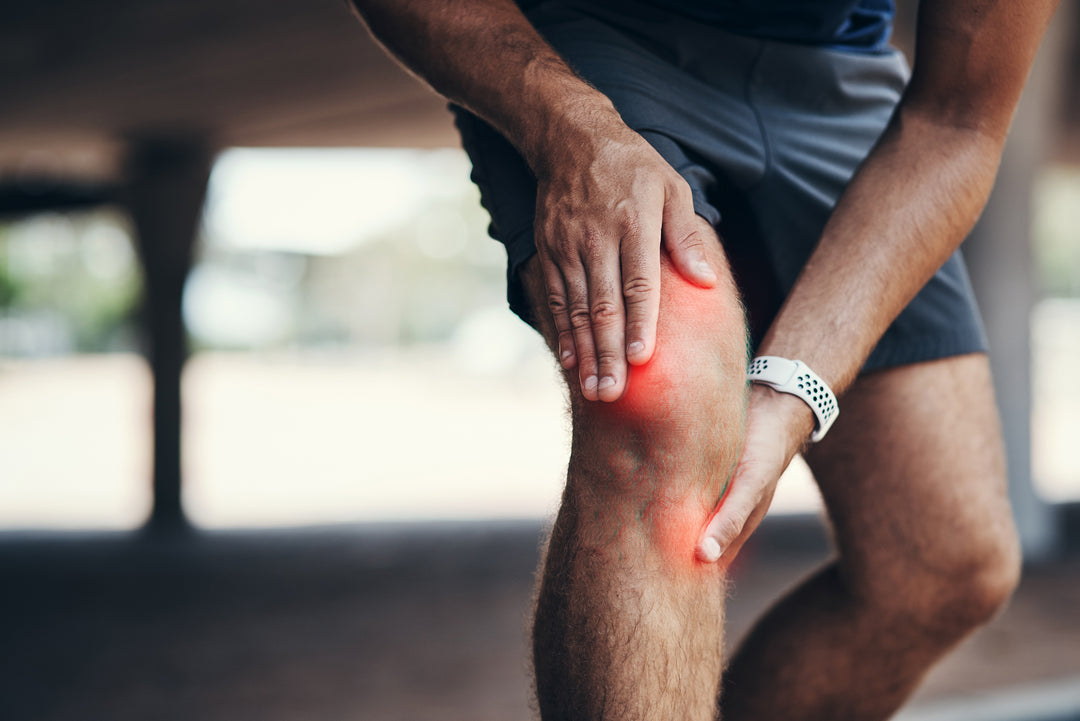
There is a particular frustration familiar to anyone who has been consistently active for years and then started to notice that the knees feel different after a long run, the hips are stiff in the morning, or the shoulders protest in ways they never used to. You did everything right. You stayed active, you maintained your weight, you didn't sit on the couch for decades. And the joints are still talking back.
The biology here is not a contradiction - it is a feature of how joints age. And understanding it is the first step to managing it effectively.
The Joints of Active Adults: Different From Sedentary Joints, Not Better
A common assumption is that lifelong physical activity uniformly protects joints. The reality is more nuanced, and understanding the difference matters for knowing how to support your joints going forward.
Regular moderate exercise is definitively protective for joint health. Physical activity maintains the mechanical loading that drives synovial fluid circulation - the primary mechanism by which nutrients reach avascular cartilage. Exercise also maintains the surrounding muscle strength that reduces the force burden on joint surfaces directly. People who are sedentary have higher rates of osteoarthritis progression than those who are moderately active.
But high-impact, high-volume, or high-load activity also accelerates cartilage micro-damage - particularly when performed over decades without adequate recovery and without the nutritional support that cartilage needs to keep up with the rate of repair demanded. Competitive runners, team sport athletes, weightlifters, and military personnel show higher rates of knee and hip joint space narrowing in long-term studies compared to sedentary controls - particularly when activity is continued into midlife without modification.
The key variable is not whether you are active - it is whether the biological systems supporting cartilage repair can keep pace with the mechanical demands you are placing on your joints. After 40, that equation shifts:
- Chondrocyte synthesis activity declines
- The anti-inflammatory capacity of synovial tissue decreases
- Collagen cross-linking becomes less efficient
- Recovery from micro-damage takes longer
The goal is not to stop being active. The goal is to give your joints the nutritional support that keeps the repair side of the equation matched to the demand side.

What Changes in Joints After 40: The Biology
Declining Chondrocyte Activity
Chondrocytes - the cells responsible for producing and maintaining cartilage matrix - become progressively less metabolically active with age. Their synthesis of aggrecan (the primary proteoglycan) and type II collagen slows, while the enzymatic activity that degrades matrix components remains relatively constant. This creates a net shift toward cartilage loss.
In a 20-year-old, micro-damage from a hard training session is repaired efficiently by chondrocytes operating at full capacity. In a 45-year-old, the same micro-damage is repaired more slowly and less completely - and if the pace of damage exceeds the pace of repair, the cumulative deficit builds over time.
Reduced Synovial Fluid Quality
Hyaluronic acid is the primary lubricating molecule in synovial fluid, produced by the synovial membrane. Its concentration and molecular weight - which determine the viscosity and lubricating capacity of synovial fluid - decline with age and under inflammatory conditions. Lower-viscosity synovial fluid means more friction between joint surfaces during movement, greater mechanical wear on the cartilage surface, and reduced nutrient delivery to cartilage through fluid diffusion.
This is why many active adults over 40 notice that joint stiffness is most pronounced first thing in the morning or after prolonged sitting - when synovial fluid has had the least opportunity to be refreshed through movement-driven circulation.
Increasing Systemic Inflammatory Baseline
Aging is associated with a measurable increase in baseline circulating pro-inflammatory cytokines - a phenomenon researchers have termed "inflammaging." This chronic low-grade systemic inflammatory state primes the synovial membrane for more intense local inflammatory responses to mechanical stress. The same training load that produced no joint inflammation at 25 may produce a meaningful synovial response at 45 - not because the joint has changed dramatically, but because the inflammatory regulatory environment has shifted.
Collagen Cross-Linking Efficiency
Type II collagen, the structural scaffold of articular cartilage, becomes less efficiently cross-linked with age. Cross-linking is the molecular bonding that gives collagen its tensile strength and structural resilience. Less efficient cross-linking means the cartilage collagen is more vulnerable to the enzymatic degradation and mechanical fragmentation that accumulates over years of use. This is where MSM and L-methionine's sulfur provision is directly relevant - sulfur is required for the disulfide bonds that form collagen's cross-linking structure.
The Sports Medicine Perspective: Evidence for Active Adults Specifically
Most joint supplement research has focused on older adults with diagnosed osteoarthritis. But a growing body of evidence addresses active adults using these compounds for maintenance and performance - which is the relevant application for many people in their 40s and 50s who are not yet dealing with clinical OA but are experiencing the early symptoms that precede it.
Glucosamine in Athletes
Multiple studies have examined glucosamine sulfate in athletes and physically active populations:
A 2009 study in the International Journal of Sports Nutrition and Exercise Metabolism found that glucosamine supplementation in young adults engaged in regular knee-loading exercise significantly reduced collagen degradation markers (urinary CTX-II, a biomarker of type II collagen breakdown) compared to placebo - suggesting a protective effect on cartilage during exercise loading.
A randomized trial published in Clinical Biochemistry (2007) found that glucosamine sulfate supplementation in young healthy adults performing knee-extension exercise reduced cartilage metabolism markers and subjective knee comfort during exercise.
MSM for Exercise Recovery
A 2011 randomized, placebo-controlled study (Journal of the International Society of Sports Nutrition) evaluated MSM supplementation in healthy men performing a half-marathon, finding that MSM significantly reduced exercise-induced muscle damage markers (creatine kinase) and reduced pain scores post-exercise compared to placebo.
A 2012 study in Osteoarthritis and Cartilage found MSM supplementation significantly improved pain and physical function in knee osteoarthritis over 12 weeks, with a safety profile comparable to placebo.
Boswellia for Sports-Related Joint Inflammation
The rapid anti-inflammatory effects of Boswellia (symptom improvement within days to weeks in clinical trials) are particularly relevant for active adults managing the cyclical pattern of training-induced joint inflammation. Where NSAIDs carry GI and cardiovascular risks with regular use, Boswellia's 5-LOX mechanism offers comparable acute anti-inflammatory effect without the same risk profile.
The Cumulative Damage Problem: Why Prevention Is More Effective Than Repair
Cartilage has no blood supply and extremely limited self-repair capacity. Once cartilage is significantly degraded, the biology of restoration is very slow and incomplete.
The best time to provide cartilage nutritional support is before significant degradation has occurred. Glucosamine and chondroitin are most effective at maintaining cartilage architecture that is still largely intact - providing the building blocks for ongoing proteoglycan synthesis and the MMP inhibition that prevents accelerated breakdown.
- NSAIDs: Reactive - block pain signals from damaged tissue. No structural benefit. Risks increase with duration of use.
- Joint nutritional support: Proactive - maintain cartilage architecture, manage inflammatory burden, support collagen synthesis. Benefits accumulate with duration of use. Risk profile is compatible with indefinite daily use.
A Practical Framework: Combining Activity, Recovery, and Nutritional Support
Load management: Periodize training to allow cartilage recovery between high-impact sessions. Rest days are not optional for joint health after 40.
Strength training: Maintain the muscle strength surrounding joints - particularly the quadriceps for knee health and hip abductors/external rotators for hip and knee stability.
Nutritional support: Consistent daily use of a comprehensive joint formula addressing both structural (glucosamine sulfate 1,500mg, chondroitin) and inflammatory (Boswellia, turmeric) dimensions.
Hydration: Synovial fluid is water-based, and cartilage is 65-80% water. Consistent hydration supports synovial fluid volume, viscosity, and nutrient delivery to cartilage through diffusion.
Body composition: Every pound of excess body weight applies approximately 4 pounds of additional compressive force on the knee joint during walking. Body composition management is one of the highest-leverage joint health interventions available.
Clear Joint Support: Formulated for Active Adults Who Aren't Ready to Stop
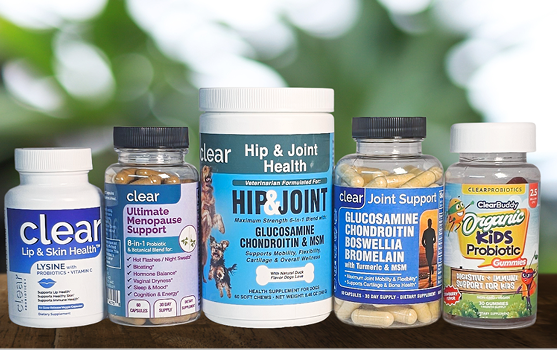
Clear Joint Support (Clear Wellness 360) was formulated for exactly this population - people who are training, competing, or committed to an active life in their 40s, 50s, and 60s who want comprehensive joint support without shortcuts. The 8-compound formula - Glucosamine Sulfate Potassium 1,500mg, Chondroitin Sulfate, MSM, Turmeric 4:1 Extract, Boswellia 65% Boswellic Acids, Quercetin, Bromelain, and L-Methionine - covers cartilage structure, collagen synthesis, and dual-pathway anti-inflammatory coverage in a single daily serving. Shellfish-free. Non-GMO, gluten-free, soy-free, dairy-free. GMP-certified USA manufacturing, third-party tested.
→ View Clear Joint Support on Clear Wellness 360
→ View Clear Joint Support on Amazon
Glossary of Key Terms
Chondrocyte - The specialized cell type responsible for producing and maintaining articular cartilage matrix, including type II collagen and aggrecan proteoglycans. Chondrocyte metabolic activity declines with age, shifting the balance between cartilage synthesis and cartilage degradation toward net loss.
Aggrecan - The primary proteoglycan in articular cartilage, responsible for the tissue's compressive stiffness and water-holding capacity. Aggrecan content is among the earliest indicators of cartilage health.
Synovial Fluid - The viscous, lubricating fluid produced by the synovial membrane that fills the joint capsule. Provides lubrication between joint surfaces and delivers nutrients to avascular cartilage through diffusion.
Hyaluronic Acid - The primary lubricating molecule in synovial fluid. Its concentration and molecular weight decline with age and under inflammatory conditions, reducing lubricating capacity.
CTX-II - A biomarker found in urine that reflects the rate of type II collagen breakdown in cartilage. Elevated CTX-II indicates active cartilage degradation.
Inflammaging - Chronic, low-grade systemic inflammatory state that develops with aging. Primes the synovial membrane for more intense inflammatory responses to mechanical joint stress.
Matrix Metalloproteinases (MMPs) - Zinc-dependent enzymes that degrade cartilage collagen and proteoglycans. Chondroitin sulfate's MMP inhibitory activity is directly relevant to slowing cartilage breakdown.
Type II Collagen - The primary structural protein of articular cartilage. Cross-linking requires adequate sulfur availability - which is why MSM and L-methionine are important in a joint formula.
Glucosamine Sulfate Potassium - A stable, highly bioavailable form of glucosamine sulfate that can be produced without shellfish. The potassium salt form is used in Clear Joint Support.
5-LOX (5-Lipoxygenase) - The enzyme that produces leukotrienes from arachidonic acid, driving the cellular inflammatory response in joint tissue. Boswellia's boswellic acids specifically target this enzyme.
Frequently Asked Questions
Q: Is joint pain inevitable for people who exercise a lot?
Not inevitable, but more likely without appropriate support. Regular moderate exercise is protective for joint health. However, high-impact or high-volume activity over decades creates accumulating cartilage micro-damage that requires effective repair mechanisms. After 40, consistent nutritional support makes continued high activity levels more sustainable for long-term joint health.
Q: What is the best joint supplement for runners?
For runners, the most important formula elements are glucosamine sulfate 1,500mg, chondroitin sulfate (MMP inhibition), MSM (sulfur for collagen cross-linking), and Boswellia (5-LOX anti-inflammatory coverage for the synovial inflammation that high-mileage running can generate).
Q: At what age should I start taking joint supplements?
For physically active people, most practitioners recommend beginning comprehensive joint nutritional support in the 35-45 age window, before cartilage degeneration has significantly progressed. These compounds are most effective at maintaining cartilage architecture that is still largely intact.
Q: Can I take joint supplements around my workout?
Yes. There is no documented interaction between joint supplement components and exercise performance. The most important factor is consistent daily use rather than workout-specific timing.
Q: How do joint supplements interact with fish oil or omega-3s?
Omega-3 fatty acids have their own anti-inflammatory mechanism, making them complementary to Boswellia and turmeric. Fish oil and a comprehensive joint formula can be taken together without meaningful interaction risk.
Q: How is the shellfish-free glucosamine different from regular glucosamine?
Shellfish-free glucosamine sulfate is produced through microbial fermentation of plant-based substrates, yielding an identical glucosamine sulfate molecule without shellfish-derived source material. The biological activity is the same.
These statements have not been evaluated by the Food and Drug Administration. This product is not intended to diagnose, treat, cure, or prevent any disease.
References: Pearson RG et al. (2011). Glucosamine sulfate supplementation reduces articular cartilage collagen degradation in young adults during knee-loading exercise. International Journal of Sports Nutrition and Exercise Metabolism. | Usha PR & Naidu MU (2004). Randomised, double-blind, parallel, placebo-controlled study of oral glucosamine, methylsulfonylmethane and their combination in osteoarthritis. Clinical Drug Investigation, 24(6), 353-363. | Felson DT (2004). Risk factors for osteoarthritis. Clinics in Geriatric Medicine, 26(3), 593-608. | Kobayashi H et al. (2012). Changes in biomarkers of cartilage and bone turnover in professional volleyball players after supplementation with glucosamine. Journal of Sports Medicine and Physical Fitness.